Good Samaritan teacher forced to close free student apartments after hefty property tax bill
An Incheon middle school teacher who gave free lodging to more than 50 university students over the past seven years will end his support after being hit with a 12.5 million won ($8,780) bill aimed at owners of multiple homes.
Middle school teacher Kim Chang-wan pours rice in a free dormitory operated in his apartment in Incheon in an undated photo.YONHAP
For more than seven years, a middle school teacher turned two Incheon apartments into free rent, free rice and one less thing to worry about for more than 50 students who couldn't afford to live near their universities.
Now, a tax bill meant to target property speculators with multiple properties will end his generosity, even though Kim never made a cent off the apartments.
“I will stop operating the free dormitories starting next year,” Kim Chang-wan, the vice principal of Inha University Middle School, told the JoongAng Ilbo on Aug. 12. “The student currently living in the dormitory will be the last person I support.”
Kim, an Inha University alumnus, bought two apartment units in Michuhol District, Incheon, in 2018 and 2020. He then turned them into free dormitories for younger and financially troubled students at his alma mater who came from outside the region.
He did so in the hope that no student would have to follow the path he had taken more than 30 years ago, when he drove a 25-ton truck to pay for college tuition.
More than 50 students from across the country, including Mokpo in South Jeolla, Daegu, Seosan in South Chungcheong and Yeonpyeong Island in Incheon, have lived in the apartments over the years.
But the dormitory program was thrown into jeopardy in September last year, when the National Tax Service’s (NTS) Yeonsu District Office assessed Kim 12.5 million won ($8,780) in comprehensive real estate holding taxes for 2021 and 2022.
At the time, owners of multiple homes were subject to the tax if the combined state-assessed value of their properties exceeded 600 million won. The combined value of properties in Kim’s name, including the two apartments used as free dormitories, exceeded the threshold.
Kim paid the tax at the time by drawing on an overdraft account. It even forced him to indefinitely postpone plans to renovate the aging dormitories and accommodate more students.
A petition filed by a former resident who lived at Kim Chang-wan's free dormitorySCREEN CAPTURE
Kim’s story soon caught the attention of the media — and of former residents, who appealed to tax authorities.
“The university dormitory cost more than 1.2 million won per semester, which was a significant burden,” a student who had lived in Kim’s dormitory for more than three years wrote in the petition. “Kim did not ask for a security deposit or rent. He even provided rice and daily necessities and created an environment where we could focus solely on our studies.”
The former beneficiary and petitioner underscored that Kim’s properties were not for personal profit.
“The many students who have lived here can attest that Kim did not own these homes for personal speculation or rental income,” the student wrote. “Please take into account that this was not simply a place to live, but a cherished home where we experienced the kindness of others firsthand.”
The Anti-Corruption & Civil Rights Commission also sought ways to provide relief. The commission also informed tax authorities that Kim had run the dormitories out of goodwill and had donated more than 70 million won for scholarships through Inha University and its alumni association over the past two decades.
Tax authorities considered granting him a reduction in light of those circumstances but ultimately rejected the request over concerns about fairness to other taxpayers.
“It is unfortunate, but there is no legal basis for reducing the comprehensive real estate holding tax,” an official from the NTS said.
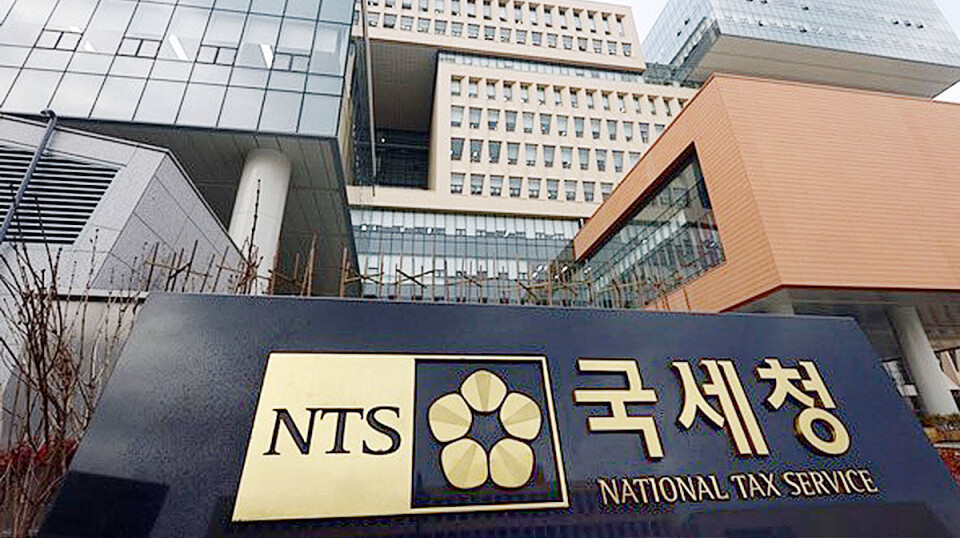
The National Tax Service's office in SejongNEWS1
With his finances strained after paying the tax, Kim was unable to renovate the aging dormitories and could not accept any new students this year.
He once considered setting up a new dormitory elsewhere because the apartments are slated for redevelopment. However, he ultimately decided to abandon the program altogether because of the tax burden and rising housing prices.
“The two apartments I bought to use as dormitories have not risen in value, so I have not made any capital gains from them,” Kim said. “What saddens me most is that a home for students in need is disappearing because I no longer have the means to keep it going.”
Current law leaves a void in tax relief for individuals who use their own property to operate dormitories for the public good, experts say.
“Under the current law, there is indeed no way to provide relief because there are no tax-reduction provisions for dormitories purchased and operated by individuals rather than nonprofit organizations,” Kim Woo-cheol, a professor of taxation at the University of Seoul, said.
“Similar cases may exist, which is why we need tax relief for people who clearly purchase property to serve a public purpose.”
This article was originally written in Korean and translated by a bilingual reporter with the help of generative AI tools. It was then edited by a native English-speaking editor. All AI-assisted translations are reviewed and refined by our newsroom.