President Lee Jae Myung, second from right, and First Lady Kim Hea Kyung, third from right, listen to an official's explanation during a visit to the "Geunyang Deurim" food assistance program at a welfare center in Chungju, North Chungcheong, on Feb. 11.JOINT PRESS CORPS
Starting this month, Korea will introduce a series of policy changes for the second half of 2026, including free menstrual product dispensers at public facilities, short-term parental leave and 24-hour foreign exchange trading.
The government announced the changes on Tuesday by releasing a guidebook detailing what will change in the second half of this year.
The government has published the guidebook twice a year since 1997, outlining major legal, regulatory and policy changes taking effect in each half of the year.
Students study at a library in Chungnam National University on June 18 during the university's final exam period.NEWS1
Among the major economic measures, the maximum annual contribution to the Yellow Umbrella Mutual Aid Fund, a government-backed safety net for small and medium-sized businesses,will increase from 3 million won ($1,900) per quarter to 18 million won per year, beginning this month. The measure aims to better support small business owners and help them get back on their feet after a business failure.
The government will also introduce a program to further lower interest rates on outstanding policy loans for small business owners who have closed their businesses in a bid to easetheir repayment burden.
For young adults and adolescents
Policies aimed at financing underprivileged or struggling young adults will take effect.
Beginning in July, eligibility for interest-free student loans will be expanded from students in the fifth income bracket or below to those in the sixth income bracket or below. A broader scope will be applied to students attending universities outside the Seoul metropolitan area, with students in the eighth income bracket or below eligible.
In Korea, the government classifies student aid income brackets to determine eligibility and benefit levels for financial aid programs. The brackets are based on a household's recognized income, which combines income and assets. As of 2026, students are classified into basic livelihood and near-poverty categories, followed by income brackets 1 through 10. Students in lower brackets qualify for larger financial aid awards.
The government will also launch a job training boot camp for 4,000 young job seekers, jointly operated by universities and companies to strengthen workplace skills. It will also begin a program that selects young people from regional areas to work for six months at Korean embassies and diplomatic missions overseas.
To reduce disparities between students enrolled in schoolsand out-of-school youths, the government will cover the application fee for up to two mock College Scholastic Ability Tests per year, with each exam subsidized by 12,000 won.
Income limits for child support payments in advance will also be abolished. Previously, only single-parent households with recognized income at or below 150 percent of the median income qualified. The government said the change is intended to ensure faster support for families raising children.
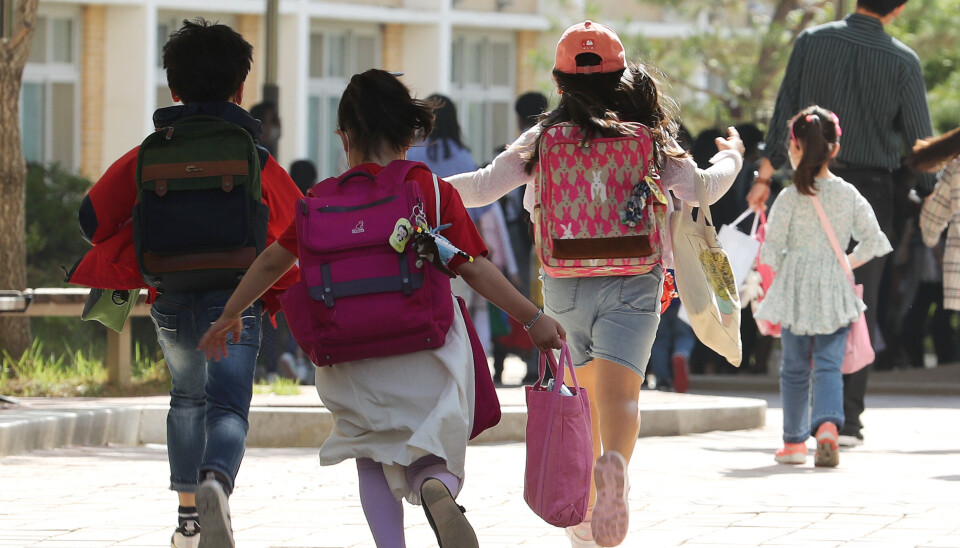
Elementary school students in Sejong head to school on May 27, 2020.YONHAP
Stronger labor protections
Labor protections will also be strengthened.
For bankrupt businesses, the government's wage guarantee program will expand coverage from the final three months of unpaid wages to the final six months.
Employers convicted of wage theft will face tougher penalties beginning on Oct. 8, with the maximum sentence toughened from three years in prison or a fine of up to 30 million won to five years in prison or a fine of up to 50 million won. The same higher penalties will apply to employers who fail to pay retirement benefits.
Workers will also gain greater flexibility over mandatory break periods starting this December. Employees working four-hour shifts who explicitly waive their 30-minute break as mandated by the Labor Standards Act will be allowed to leave immediately after finishing work, rather than remaining at the workplace for an additional 30 minutes to cover the break time.
Parental leave rules will also become more flexible. Beginning in December, childcare leave may be taken once a year in one- or two-week increments to accommodate short-term caregiving needs, such as school vacations, temporary school closures or a child's illness.
Starting in September, spouses will be allowed to use paternity and parental leave even during pregnancy. Government support for infertility treatment leave will also double from two days to four.
People line up to purchase tickets at a movie theater in Yongsan District, central Seoul, on March 8.NEWS1
More cultural benefits
The government will also roll out a broader range of public support measures, including movie ticket discounts, food assistance and expanded access to free menstrual products.
A second round of 6,000-won discount vouchers for movie tickets will be distributed in July following the first round issued in May, with a total of 4.5 million vouchers available.
Young adults aged 19 to 20 will be eligible for up to 200,000 won annually to spend on cultural activities such as performances and exhibitions.
Authorities will also strengthen measures against ticket scalping by making all illegal ticket resales punishable regardless of whether automated purchasing software was used. A reward program for reporting illegal resales will also be introduced.
Administrative fines will also be introduced for the illegal distribution of Onnuri gift certificates to strengthen penalties for violations. Onnuri gift certificates are used to pay for goods at traditional markets and small shops at a discounted price.
A food assistance program for people facing financial hardship will expand from 158 local governments to 229, operating at 300 locations nationwide. Dubbed “Geunyang Deurim” in Korean, meaning "simply giving," the program provides food assistance to people facing financial hardship, offering three to five essential food and household items per person worth up to 20,000 won.
The public menstrual product program will also be expanded. Previously offered only as vouchers to vulnerable girls and young women ages 9 to 24, free menstrual products will now be available to anyone through dispensers installed in public facilities, while the existing voucher program remains in place.
A commuter passes through a fare gate at Jonggak Station on Seoul Subway Line 1 on June 22.YONHAP
Changes in transportation policy
Transportation services will also become more convenient.
A unified high-speed rail application launching in August will allow passengers to reserve both KTX and SRT tickets in one place. Beginning in October, advance ticket reservations will open two months before departure instead of one month.
A free transfer policy allowing passengers to re-enter metropolitan rail systems within 15 minutes will be extended to Korail-operated commuter rail lines, including most sections of subway Line No. 1, parts of Lines No. 3 and 4 and the Gyeongui–Jungang Line, Suin–Bundang Line, Seohae Line, Gyeonggang Line and Gyeongchun Line. Riders will be exempt from paying the base fare when they re-enter within the time limit.
Toll discounts will also expand. People with disabilities and national merit recipients will receive a 50 percent toll discount even when using long-term rental or leased vehicles. Families with two or more children under the age of 19 will receive a 10 percent toll discount on weekends and public holidays, and families with three or more children will receive 20 percent discounts.
An exchange dealer works in the trading room at Hana Bank in Jung District, central Seoul, on June 29.NEWS1
Financial convenience and public safety
The government will roll out a range of measures aimed at improving financial services, expanding consumer convenience and strengthening public health protections.
Beginning in July, Korea's interbank foreign exchange market will operate around the clock on weekdays except on New Year's Day. The measure is intended to improve access for foreign investors and better accommodate real-time foreign exchange demand from exporters and importers, allowing customers to exchange currencies at live market rates even during overnight hours.
Lottery ticket sales will also expand to mobile platforms in addition to existing retail outlets and personal computers.
Warning labels and graphic health warnings on liquor bottles and alcohol advertisements will also be strengthened from November.
This article was originally written in Korean and translated by a bilingual reporter with the help of generative AI tools. It was then edited by a native English-speaking editor. All AI-assisted translations are reviewed and refined by our newsroom.