An AI-generated image of a person stealing memory chipsCHATGPT
A surge in memory chip prices driven by demand from the AI industry has led to a string of thefts at companies, schools and internet cafes, as thieves steal memory components and resell them.
The Yeoju branch of the Suwon District Court sentenced an employee at an SK hynix subcontractor to 18 months in prison on charges of theft and attempted theft on Sept. 1.
The employee was indicted for stealing memory cards on multiple occasions from an SK hynix facility in Icheon, Gyeonggi, between September and November last year, according to the ruling. The employee concealed the memory cards in cable boxes, toolboxes and shoes to evade security checks, and stole cards worth about 171.3 million won ($128,000).
On Nov. 21 of the same year, the employee attempted to take memory cards worth about 18 million won out of the facility by hiding them in a LAN cable box, but was caught by a security checkpoint employee.
The employee had worked for an SK hynix subcontractor for more than 12 years, maintaining computer and equipment networks at semiconductor manufacturing facilities within the company. Investigators found that the employee decided to steal and resell memory cards after accumulating debt and experiencing financial difficulties that led to personal rehabilitation proceedings in September of last year.
“The amount of damage caused by the crimes is substantial, much of the loss has not been recovered and the defendant failed to reach a settlement with the company,” the court said. “However, the court took into consideration that the defendant admitted to the offenses and has no prior convictions for similar crimes.”
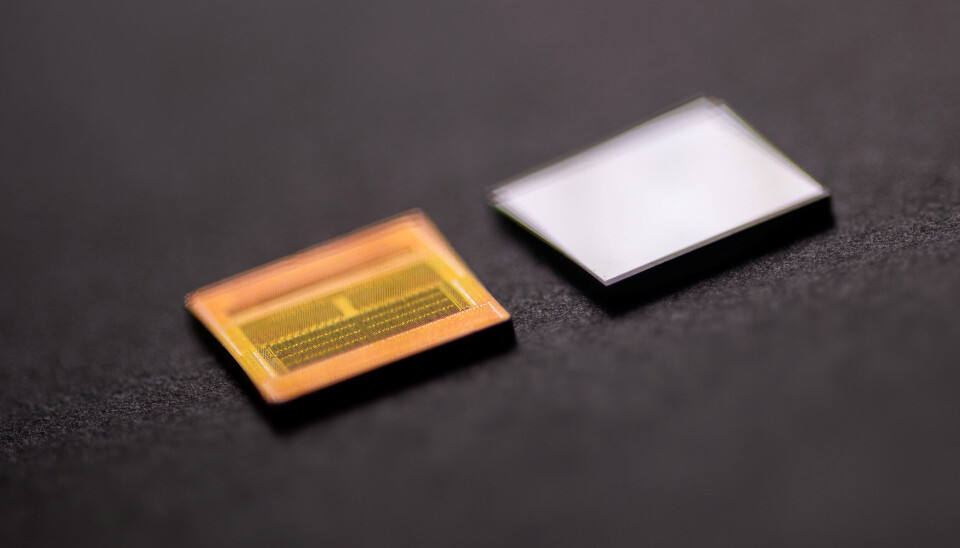
A highest-capacity, high-bandwidth 16-High HBM3E memory chip from SK hynix is seen in this studio photograph in San Francisco on Aug. 6, 2025.REUTERS/YONHAP
Such memory thefts have occurred both in Korea and overseas amid “chipflation." While GPUs were once the main target of such thefts, criminals have increasingly turned to memory components as growing demand from AI data centers pushes memory prices higher.
In March, the Incheon Metropolitan City Office of Education caught a former employee of an information technology equipment maintenance company who allegedly swapped memory cards installed in school computers for cheaper, lower-specification products and reported the case to police. In another case, police in Suwon, Gyeonggi, arrested a person in February on suspicion of stealing and reselling random-access memory worth about 15 million won from an internet cafe.
The average contract price of a mainstream dynamic random-access memory (DRAM) product for computers rose 4.2 percent from the previous month to $25 last month, more than eight times its level in June 2016, according to market tracker DRAMeXchange.
Experts expect the memory supply shortage to persist through 2027.
This article was originally written in Korean and translated by a bilingual reporter with the help of generative AI tools. It was then edited by a native English-speaking editor. All AI-assisted translations are reviewed and refined by our newsroom.