
All in the timing? Korea’s T+1 stock settlement plan faces foreign investor concerns
Korea plans to move to next-day stock settlement in 2028, but overseas institutions are worried about time zone and currency hurdles.
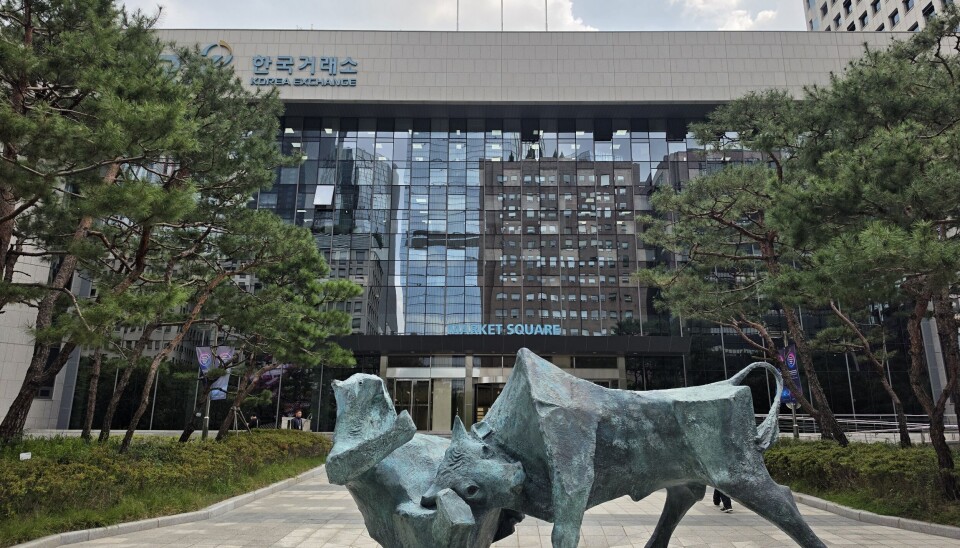
Korea plans to cut the wait for stock sale proceeds from two days to one as early as 2028, its first settlement overhaul in more than 50 years. But foreign investors warn the change will leave them with less time to confirm trades and exchange currency across time zones.
The Korea Exchange (KRX), Korea Securities Depository, Korea Securities Finance Corp. and Korea Financial Investment Association unveiled a draft road map on Monday to shorten the stock market’s settlement cycle, the time it takes for cash and shares to change hands after a trade, from the current T+2 to T+1. Settlement involves more than 10 steps, including trading, confirmation, correction, guarantee and approval, which will all have to be completed within one day instead of two.
The push gained momentum after President Lee Jae Myung raised the issue at a March 18 capital market meeting. “I sold stocks today, so why is the money paid the day after tomorrow?” Lee asked.
Under the road map, the KRX and the Korea Securities Depository are set to revamp their trade-processing systems by October 2027, and brokerages and other financial firms will finish upgrading their IT systems by the first quarter of 2028. At least six months of integrated testing is scheduled to follow.
“We went through considerable difficulty coordinating the schedule,” Park Sang-wook, head of the KRX's clearing and settlement division, said at a briefing Monday. “We have presented a challenging target.” The road map itself is meant to push the institutions involved to get ready, according to the exchange.
Before the switch, brokerages will cut interest rates on loans backed by stock sale proceeds, which let investors borrow the money from a sale before it settles, from the current 7.5 to 10.0 percent a year to the mid-to-high 5 percent range, starting with Mirae Asset Securities and Kiwoom Securities this month. The move is meant to ease the two-day wait until T+1 takes effect. Once 12 brokerages offer the lower rates, investors are expected to save about 25 percent each on interest, or about 15 billion won ($11.1 million) a year in total.

The biggest obstacle is the burden on foreign investors. Because of the time difference, a shorter cycle leaves investors in the United States and Europe less time to confirm trades and exchange currency.
Overseas institutions have complained about having to staff night shifts just for the Korean market. If demand for won piles up in the early morning hours, a liquidity shortage could disrupt currency exchange.
In a survey of 32 institutions including foreign brokerages, 27, or 84.4 percent, said they wanted the switch to take place in the second half of 2028 or later. Out of 21 institutions that answered a separate question, seven, or 33.3 percent, said they could reduce their holdings of Korean stocks if preparations fall short.

The move follows a global shift toward next-day settlement. The United States, Canada, Mexico and India have already switched, and the European Union, Britain and Switzerland plan to follow in October 2027.
Closer to home, however, the timing is less certain. Hong Kong pushed back its own T+1 switch to the second half of 2028, and Japan has yet to set a schedule, making it harder for Korea to align with other major Asian markets.
For retail investors, the change cuts both ways. Shares sold on a Monday are currently paid out on Wednesday, but under T+1 the money will arrive on Tuesday. Investors who buy shares with only a partial deposit, however, will have to pay the balance a day sooner. Forced sales of their holdings to recover unpaid balances will also move up from three trading days after the trade to two.
“Shortening the settlement cycle could lower trading costs by easing margin burdens,” Park said. “We will run related simulations and review investor protection in depth.”
The biggest concern for regulators is keeping settlement as reliable as it is now. At least 618 financial institutions in Korea will have to change their IT systems, adding risk to a market whose settlement failure rate is currently close to zero.
“Because this is a change to an extremely important national payment and settlement system, there cannot be even the slightest mistake,” Park said. “We will go through more than six months of thorough integrated testing and decide the timing strategically, taking into account the transition schedules of neighboring countries.”
BY PARK YU-MI [[email protected]]


