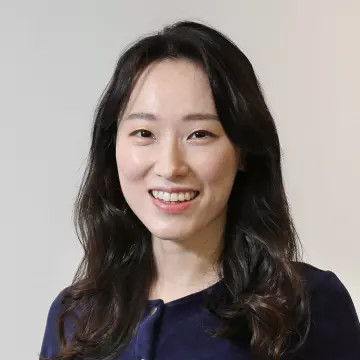
Kim Jin-young and her husband celebrate their daughter’s first birthday at a venue specializing in first-birthday celebrations in Gangseo, western Seoul, on Nov. 1, 2025.KIM JIN-YOUNG
To Korean parents, a child’s first birthday is more than a milestone. It is an occasion of extraordinary significance, often celebrated with the same weight as a wedding.
Eager parents are willing to spend tens of millions of won on a single day, booking and designing lavish venues, decorating them with an abundance of flowers and balloons and renting elaborate, custom-tailored dresses for their precious little ones. While some budget-conscious families opt to borrow decorations and other party items from second-hand marketplaces, families planning larger celebrations often begin making reservations months in advance, sometimes before the baby is even born.
It may seem like an obsession to those unfamiliar with Korean culture, and all the more notable given the country’s notoriously low fertility rate that stood at just 0.8 in 2025, one of the world’s lowest. Yet the trend reflects an evolution rooted in a painful chapter of history, when infant mortality rates were so high during periods of poverty and underdevelopment that making it past one’s first year was deemed as a major milestone. By throwing a party with families, relatives and friends, people wished the child good health and longevity.
“Back when Korea was really struggling just to make a living, and when medical facilities were virtually nonexistent, many children died before reaching their first birthday,” said Huh Chang-deog, who teaches sociology at Yeungnam University, noting that this reality was reflected in the delayed registration of many children, as they often did not survive beyond that age.
“Because of that, reaching one year after birth meant there was a strong chance the child would survive, so it was celebrated in a big way. Today, however, it’s less about having passed a threshold between life and death, and more about celebration,” Huh added.
Korea’s infant mortality rate stood at 74 per one thousand live births in 1960, according to data from the World Bank Group, when the country was still at an early phase of development. That was almost three times higher than the rate of 26 per one thousand live births seen in the United States the same year.
But as Korea’s infant mortality rate has since sharply dropped to just 2 per one thousand live births in 2024 — a number even lower than the 6 per one thousand live births in the United States – the meaning of a first birthday celebration has also evolved from a celebration of survival to a family festivity.
One-year-old daughter Park I-seo poses for a photo during an event to celebrate her first birthday in Gangseo, western Seoul, on Nov. 1, 2025.KIM JIN-YOUNG
From survival ritual to a lavish celebration
Dating at least back to the Joseon Dynasty (1392-1910), the first birthday celebration historically focused on a child’s health and growth. That was marked by the Dolsang, which specifically refers to a table of food for a baby’s first birthday.
The table is usually filled with ample food associated with good fortune and longevity, including long noodles, susu-pat gyeongdan (red bean and sorghum rice-ball cakes), which are believed to prevent evil and to bring a life free from disease and baekseolgi (steamed white rice cake), which signifies sacredness and faithfulness.
Alongside hopes for a healthy future, a handful of objects were also placed before the child in a ritual known as doljabi, used to predict their future. These often included rice, symbolizing wealth; a spool of thread, representing longevity; and books, signifying academic success.
As more Koreans choose to have only one child, many are spending lavishly on their baby's first birthday. While guest lists have shrunk to immediate family from the large gatherings of relatives, friends and co-workers that were once common, celebrations have grown more extravagant.
Luxury hotels have become some of the most sought-after venues, with reservations at popular properties often selling out within minutes of opening. Some parents even hire event planners dedicated solely to their baby's first birthday. The planners coordinate everything from outfits, hair and makeup to photography, videography, the cake and even an assistant on the day of the event.
A table is set for a one-year-old baby's first birthday celebration.JOONGANG ILBO
“I felt that a child's first birthday is a once-in-a-lifetime milestone that never comes again,” said Kim Jin-young, the mother of one-year-old Park I-seo, who celebrated the event in November of last year. Kim began booking services, including a photography studio, seven months before the celebration, and ultimately spent about 13 million won ($8,400) on the event.
“It was the first major milestone for us as parents, so we wanted to celebrate it without any regrets,” she said. “Also, after everything I went through during pregnancy, childbirth and raising a baby, I didn't hesitate to invest in getting dressed up for the occasion as well.”
“Today’s doljanchi celebrations increasingly appear to function as a marker of social status,” said Huh. “They are used not only to signal one’s position in society, but also to differentiate oneself from others. Social media has played a key role in shaping this trend — people see something distinctive online, try to replicate it, and then seek to create something even more unique based on it.”
"With fewer children being born, parents are willing to spend more on each child,” said Shin Hye-ri, associate professor in the department of gerontology at Kyung Hee University. “A first birthday also comes at an age when families have relatively few alternatives for marking the milestone, as the child is still too young for activities such as overseas travel. As a result, parents tend to invest more time, effort and money into the celebration."
Lifelong milestones
Beyond the first birthday, Koreans have traditionally celebrated the significance of other age-based celebrations from hwangap to chilsun and palsun, a celebration of one’s 60th, 70thand 80thbirthdays, respectively.
The 60th birthday, for instance, was traditionally a major occasion marked by grand celebrations and lavish banquets — a practice even documented in the annals of the Joseon Dynasty, which records a royal order in 1682 instructing the holding of a celebratory feast.
“Although the cost of the 60th birthday banquet is enormous, the direct descendants devote themselves wholeheartedly out of filial piety, hoping to ensure that the celebration is held on a grand scale,” according to the Encyclopedia of Korean Culture published by the Academy of Korean Studies, a government-funded institution under the Ministry of Education.
The origin of such tradition dates to a time of lower life expectancy, when few people were expected to live beyond that milestone. Back in 1960, Koreans’ life expectancy at birth stood at just 54, compared to today’s 84, according to World Bank data.
On the special birthday, the celebrant, along with their family and direct descendants, would dress in their finest attire and prepare a banquet featuring elaborately stacked platters of food such as yukhoe (seasoned raw beef) and yukjeon (pan-fried battered beef) along with traditionally brewed alcoholic beverages and assorted snacks.
While the tradition persists in an era of longer life expectancy, the way people mark these milestones has evolved in Korea’s super-aged society. Rather than hosting lavish banquets for every milestone birthday, many older adults are opting to spend on experiences, particularly overseas travel. They are also increasingly willing to spend on themselves, a departure from the past when they saved and sacrificed for their children.
A still from the movie "Exit" (2019), in which a character played by actor Go Doo-shim, front left, poses for a photo during an event celebrating their 70th birthday.CJ ENTERTAINMENT
The share of older adults who said they were willing to spend their wealth on themselves rose from 17.4 percent in 2020 to 24.2 percent in 2024, reflecting changing spending patterns among the older generation, according to a report released last year by Kyung Hee University’s Age Tech Research Institute.
“I traveled abroad with my wife to celebrate both my 60th and 70th birthdays,” said a 72-year-old self-employed man who marked his 70th with a trip to Europe two years ago. “My children offered to host a party and invite extended family members, but I instead wanted to use the money to travel. Even at this age, there’s still so much of the world I want to see.”
Others are choosing not to celebrate the milestone at all, viewing such occasions as a step closer to mortality and wishing to avoid placing a burden on their children — a change widely accepted in the era where social values have changed.
“Traditional society placed a strong emphasis on ritual and social customs, but in modern society, individual autonomy, independence and financial considerations have become more important factors,” Huh said. “As industrialization accelerated after the 1970s and capitalism became more deeply entrenched, money increasingly became a key factor in decision-making, particularly for younger generations.”
The way people celebrate the customs is expected to evolve over time.
“In an aging society, turning 60 or 70 is no longer viewed as an extraordinary event,” said Shin. “People will likely continue to mark these milestones as a cultural custom, but spending is expected to shift away from banquets and toward experiences. Ten or 20 years from now, when today’s younger generations become older, identities and values shaped in virtual spaces such as social media may play a greater role, potentially giving rise to new ways of celebrating oneself online.”