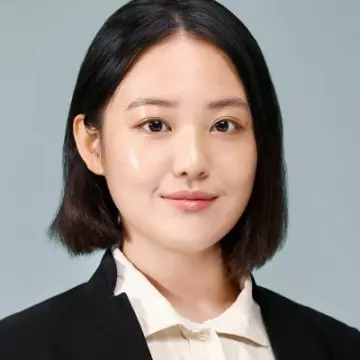
Lee Chang-dong listens to a reporter's question at a press conference for the film "Possible Love" at the Hotel Naru Seoul MGallery Ambassador in Mapo District, western Seoul, on Aug. 25.NEWS1
Many films deal with unattainable love. To some extent, director Lee Chang-dong says, audiences expect it, as love — in any form — is difficult and often elusive.
But as the title of his upcoming film suggests, “Possible Love” is interested instead in what love can be — a “story about what kinds of love are possible in our lives, and the choices we make to protect that love,” Lee said.
That question has only grown more urgent as economic hardships and technological change unsettle not only how people make a living, but how they understand themselves, he said at a press conference in Seoul on Tuesday.
Zo In-sung as Sang-woo, left, and Jeon Do-yeon as Mi-ok in "Possible Love"NETFLIX
Jeon Do-yeon as Mi-ok, left, and Cho Yeo-jeong as Ye-ji in "Possible Love"NETFLIX
The Netflix-backed and distributed film centers on two married couples from opposite economic standings whose lives become increasingly entangled. Ho-seok, played by Sul Kyung-gu, is a laid-off worker living with his wife, Mi-ok, played by Jeon Do-yeon, and their child. After documentary filmmaker Ye-ji, played by Cho Yeo-jeong, approaches the family with plans to make Ho-seok the central subject of a documentary about laid-off workers, the couple begins interacting more with Ye-ji and her husband, Sang-woo, played by Zo In-sung.
Lee said he first began developing the idea for “Possible Love” more than a decade ago, when he saw mass layoffs at large companies.
“People derive part of their identity from the work they do,” he said. “But as technology has advanced, we have moved closer to an era in which work itself could disappear.”
What then remains, and how should people live, “as the forces that govern our lives grow stronger?”
“No matter how our lives change, I think what allows them to continue is love — not only romantic love, but the love at the heart of relationships between people," Lee said.
From left, Zo In-sung, Cho Yeo-jeong, Jeon Do-yeon and Sul Kyung-gu pose for photos at a press conference for Netflix film "Possible Love" at the Hotel Naru Seoul MGallery Ambassador in Mapo District, western Seoul, on Aug. 25.YONHAP
That story will be told by some of Korea's most prolific actors, with the cast all saying on Tuesday that they jumped on the opportunity to work with Lee.
Jeon, who reunited with the director after having collaborated on "Secret Sunshine" (2007), for which she earned Best Actress at Cannes, said she didn't even read the scenario before accepting the role, knowing she wanted to work with him again.
The actor described Mi-ok as a woman who wants nothing more than a quiet, uneventful life, but lives "as if she has a ticking time bomb in her chest because she doesn't know when the anger inside her husband might explode."
“She’s someone who seems fragile but is actually very strong,” Jeon said. “Even in that situation, she never lets go of hope.”
Sul Kyung-gu as Ho-seok, left, and Jeon Do-yeon as Mi-ok in "Possible Love"NETFLIX
Sul, meanwhile, described Mi-ok's husband Ho-seok as a man carrying “guilt, anger and shame” after losing his job.
“He’s someone living in Korea with all of those emotions bottled up inside him,” he said.
The actor said working with Lee for a third time, after “Peppermint Candy” (1999) and “Oasis” (2002), made him want to recapture the passion he felt at the start of his career. Sul made his film debut in 1996.
“When I read the screenplay, I immediately felt that sense of tension again,” Sul said. “It made me want to return to the mindset I had at the beginning. Even after all these years, I thought this might be a chance to start over again as an actor.”
From left, Zo In-sung, Cho Yeo-jeong, Lee Chang-dong, Jeon Do-yeon and Sul Kyung-gu pose for photos at a press conference for "Possible Love" at the Hotel Naru Seoul MGallery Ambassador in Mapo District, western Seoul, on Aug. 25.YONHAP
"Possible Love" is Lee’s first feature-length film in eight years after “Burning” (2018), Korea’s first film to be short-listed for Best Foreign Language Film at the Academy Awards. The Korean Film Council announced Tuesday that it had selected “Possible Love” as Korea’s submission for the same category at the 99th Academy Awards.
The film will premiere in competition at the Venice Film Festival in September before heading to the Toronto International Film Festival. Before streaming on Netflix from Nov. 6, it will open in Korean theaters on Sept. 23 and in select overseas screenings — the first theatrical release for a Netflix Korea original film, and one that made the movie eligible for an Oscar consideration.
The decision to move to streaming was potentially contentious for Lee, one of Korea’s most prominent auteurs, whose work has long been associated with theatrical cinema. His partnership with Netflix came after plans with a traditional studio fell through, as the domestic film industry struggled with shrinking theater audiences.
Lee said he made the choice at a particularly difficult moment for the industry, when he was unsure how fully theaters would recover. Still, he said, he felt the "movie had to be made."
“The structure of the film industry is already changing, and I don’t think that is a trend we can stop,” Lee said. “We have to accept that theatrical films and streaming services will coexist, and think about how films can reach audiences within that changing landscape.”
“[Netflix] trusted me from the beginning,” Lee said. “Throughout production, they respected my decisions as a director without interfering [with my creative direction].”