Is the Grammys' new Asian pop category a red carpet or velvet rope for BTS?
Fans and experts alike debate whether the Grammys' new categories, including one for Asian pop, could open a path for BTS and other international artists or exclude them from the most prestigious awards.
BTS merchandise at the “BTS the City Arirang” pop-up at the Shinsegae Centum City Department Store in Busan on June 13SHIN HA-NEE
For years, K-pop has chased after a win at the Grammys, and no act has come closer to making the award feel within reach than BTS has.
Every awards season, international media spotlights and speculates on the septet’s lack of a Grammy — a noticeable blank space in the world’s biggest K-pop act’s otherwise historic list of accolades.
Now, with a new category opening a clearer path to the coveted award, K-pop could soon have a Grammy to its name, but some critics point out that the move feels less like an endorsement and more like a velvet rope.
From 2027, the Grammys will introduce five categories, including Best Asian Pop Music Performance, which will cover performances “originating from or widely recognized in Asian markets” and featuring “meaningful use of one or more Asian languages,” according to the Recording Academy’s announcement on June 16.
But reactions to the new categories have been mixed at best. For Best Asian Pop Music Performance specifically, while some see the category as giving long-overdue recognition of Asian pop’s global influence, others question whether it will help Asian artists secure mainstream honors — or simply keep them away from the Grammys’ most coveted awards.
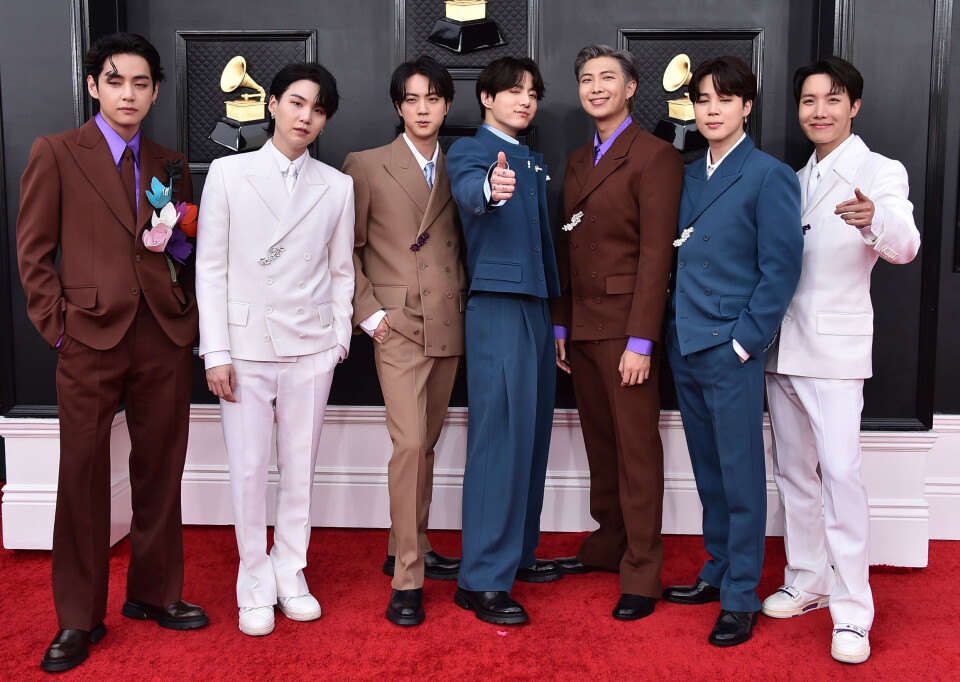
K-pop boy band BTS appears at the 64th Annual Grammy Awards in Las Vegas on April 3, 2022.AP/YONHAP
K-pop wants a Grammy
When announcing the new categories for the upcoming 69th Grammy Awards in February 2027, with nominees to be announced this Nov. 16, the Recording Academy described the additions as part of “its ongoing commitment to reflecting today’s dynamic musical landscape.”
“The changes advanced by our Recording Academy members speak to the breadth of today’s music industry and the many genres, crafts and creators shaping it,” said Grammys CEO Harvey Mason Jr. “We’re excited to see these updates come to life in the year ahead as we celebrate the […] people who are driving music forward.”
The Grammys have historically faced criticism for their alleged racial bias, and the new categories are part of their effort to address these concerns.
The introduction of the Best Asian Pop Music Performance category clearly improves prospects for K-pop and other Asian acts to secure a Grammy win, and BTS is among the most obvious potential contenders.
The group has openly spoken about its Grammy ambitions, with RM calling the awards “the final part of the whole American journey” in a 2020 Esquire interview. The septet earned its first Grammy nomination for “Dynamite” (2020) in 2020, then for “Butter” (2021) the next year. In 2022, BTS received further nominations for its Coldplay collaboration “My Universe” (2021), as a featured artist on Coldplay’s “Music of the Spheres” (2021) and its song “Yet To Come” (2022).
Members of BTS perform during their concert held in Busan on June 13.BIGHIT MUSIC
Red carpet or velvet rope?
The public reaction to the new categories, however, has been hostile, as fans of Asian artists criticized the move as exclusionary rather than inclusive.
“[The Grammys] don’t actually respect Asian artists,” wrote one user on Reddit, earning over 300 upvotes. “Or view them as equal enough to actually [pit] them against Western artists. It’s giving a lot of Western centricity and superiority.”
Pop culture critic Kim Hern-sik described the additions as following the logic of “cultural imperialism.”
“This looks like an attempt to separate [Asian music] into its own category and prevent it from gaining ground through sheer numbers,” Kim said. “The Grammys also created a Best Latin Song category, which, to me, comes across as an attempt to keep Latin music in check as well.”
BTS performs during the Busan leg of its “Arirang” world tour at Busan Asiad Main Stadium. The group held two concerts in the city on June 12 and 13, with the second show coinciding with its debut anniversary.BIGHIT MUSIC
At the same time, Kim argued that the Grammys’ criteria cannot fully capture K-pop’s influence or success, which is shaped as much by the ecommunity and culture as by musicality itself.
“Of course, K-pop should make use of whatever opportunities that it can when it comes to winning a Grammy, but in the long term, its core pillar should remain rooted in Korea,” Kim said, noting that the government-led initiative to launch an awards ceremony and annual festival dubbed “Fanomenon” could help support such efforts.
Lyrics complicate matters
But for the actual prospect of BTS winning the Best Asian Pop Music Performance, eligibility remains an unanswered question.
The Recording Academy’s updated rules specify that an Asian language must play a “significant role” in bilingual or multilingual songs and encompass more than isolated words, ad-libs and brief phrases. This could complicate matters for BTS’s latest album, “Arirang,” since the lead track “Swim” contains no Korean lyrics. B-side tracks such as “Body to Body,” “Hooligan” and “2.0” include Korean lyrics in their verses, but their eligibility remains to be seen.
BTS performs during the Busan leg of its “Arirang” world tour at Busan Asiad Main Stadium. The group held two concerts in the city on June 12 and 13, with the second show coinciding with its debut anniversary.BIGHIT MUSIC
Even before the rule change, however, fans and experts alike began to consider BTS’s Grammy prospects differently from previous years. One reason is Katseye, according to observers, as the Best New Artist nomination of the multinational girl group launched by HYBE and Geffen Records signaled the Korean company’s growing visibility within the U.S. industry.
“BTS and HYBE clearly want a Grammy win,” said music critic Lim Hee-youn. “Katseye earned a nomination, and I believe that this showcases HYBE’s networking power within the U.S. music industry and its influence on voting members [of the Recording Academy].”