
Think tank warns Korea's $1 trillion export milestone masks chip overreliance, urges portfolio rebalancing
The KIET said the recent export boom is too dependent on semiconductor prices, and warned that Korea is in danger of following the downward trajectory Germany has experienced since it hit the $1 trillion mark in 2006.

Korea has become the fourth country in the world to reach $1 trillion in annual exports, but its growth pattern resembles that of Germany, where export growth subsequently slowed, a state-run think tank said.
To sustain export growth, the think tank called for a swift restructuring of Korea's export portfolio, including the use of excess corporate tax revenue generated by the semiconductor boom to strengthen the competitiveness of other industries.
It took Korea just one year to increase its annual exports from $700 billion to $1 trillion, according to a report released by the Korea Institute for Industrial Economics & Trade (KIET) on Friday. Korea reached the milestone faster than China, which took two years; Germany, three years; and the United States, six years.
But the driving force behind Korea's export growth more closely resembles that of Germany than that of China.
Germany, which reached $1 trillion in exports in 2006, benefited from a strong euro that boosted the dollar value of its exports. China, which reached the milestone the following year, substantially increased its manufacturing export volumes after joining the World Trade Organization. In its report, the KIET characterized Germany's growth as “price-driven” and China's as “volume-driven.”
The two countries subsequently followed diverging growth trajectories.
Germany's key industries, including automobiles and machinery, lost competitiveness as the country lagged in digital transformation and China narrowed the technological gap. China's exports, meanwhile, fell 15.9 percent in 2009 amid the global financial crisis but surpassed precrisis levels the following year. From the year each country reached the $1 trillion milestone through last year, China's exports grew by an annual average of 6.5 percent, which is 2.6 times Germany's 2.5 percent.
Korea has experienced price-driven growth similar to Germany's, but faces greater risks because the benefits of rising prices are concentrated in semiconductors. Korea's export value index in October surged 107.6 percent on year, while its export volume index rose just 43.9 percent.
The reliance on memory chips is also deepening within the semiconductor sector itself, with DRAM exports in the first three quarters this year rising 369 percent compared to the same period a year earlier. The on-year rise is 28 times the 13.1 percent growth recorded in system semiconductor exports.
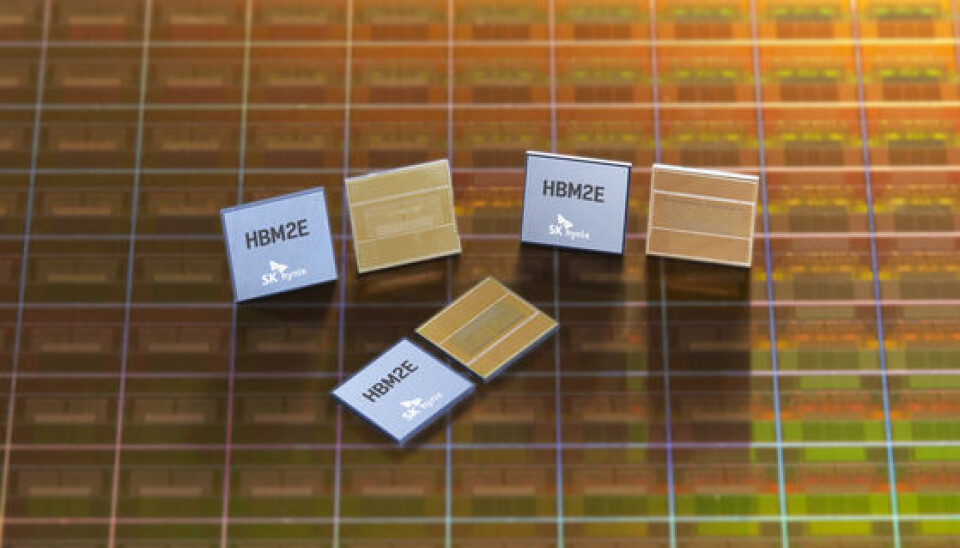
Korea's top 10 export products accounted for 50.2 percent of its total exports in 2024. The figure was nearly twice the shares recorded in Germany and China, at 28.5 percent and 27.4 percent, respectively. Korea's share climbed further to 66 percent in the first nine months of this year.
The combined export value of Korea's five emerging major export products, including electrical equipment and cosmetics, fell from 21 percent of semiconductor exports in the first quarter of this year to 13.2 percent in the third quarter.
The KIET projected that Korea's policy response over the next one to two years would determine the trajectory of its export growth. In particular, the think tank proposed allocating a portion of excess corporate tax revenue generated during the semiconductor boom primarily to investments in production facilities and supply chains in other industries. It also recommended raising the cap on government-backed financing for nonsemiconductor industries as semiconductors account for a growing share of total exports.
The institute also called for targeted support for products with the potential to lead their respective global export markets. It identified 19 nonsemiconductor product categories, including tanks, armored vehicles and hybrid passenger cars. Under the proposed system, support would end once a product reaches the top spot globally, but the need for continued support would be reassessed if its ranking failed to improve within three years.
“The policy goal should focus not on reducing export concentration itself, but on making Korea's export structure less vulnerable to semiconductor price shocks,” the researchers said.
BY AHN HYO-SEONG [[email protected]]


