Travelers stand at a bank currency exchange counter, with the dollar-won exchange rate displayed overhead, at Incheon International Airport's Terminal 2 on July 2.KIM KYOUNG-ROK
With the won and other Asian currencies weakening against the dollar, people have drawn comparisons to the 1997 Asian financial crisis, though analysts say that the current situation differs significantly from that of three decades ago.
The won has traded in the 1,500 range against the dollar for more than a month, and the Japanese yen recently fell to its weakest level in 40 years. Southeast Asian currencies, including the Indonesian rupiah, Thai baht and Philippine peso, have also come under pressure.
Data from the Bank of Korea, released on Thursday, shows that the won weakened by 7.5 percent against the dollar between Jan. 2 and Tuesday. That was a steeper decline than the rupiah’s 7 percent, the baht’s 5.6 percent, the peso’s 3.8 percent and the yen’s 3.3 percent. Over that period, the rupiah saw its weakest level on record, briefly surpassing 18,000 against the dollar.
Markets are drawing comparisons to the 1997 Asian financial crisis, as many of the currencies currently under pressure were also involved in that emergency.
In the mid-1990s, the strengthening dollar caused pegged Southeast Asian currencies to become increasingly overvalued. The baht eventually came under speculative attack, triggering a crisis that spread to Indonesia, the Philippines and ultimately Korea.
And the strong dollar is once again at the center of the turmoil.
The U.S. Dollar Index climbed to 101.7 on June 25, its highest level in 15 months, and remains above 101. The move followed a 4.2 percent on-year increase in U.S. consumer prices in May, the highest in three years, fueling expectations that the U.S. Federal Reserve could raise interest rates.
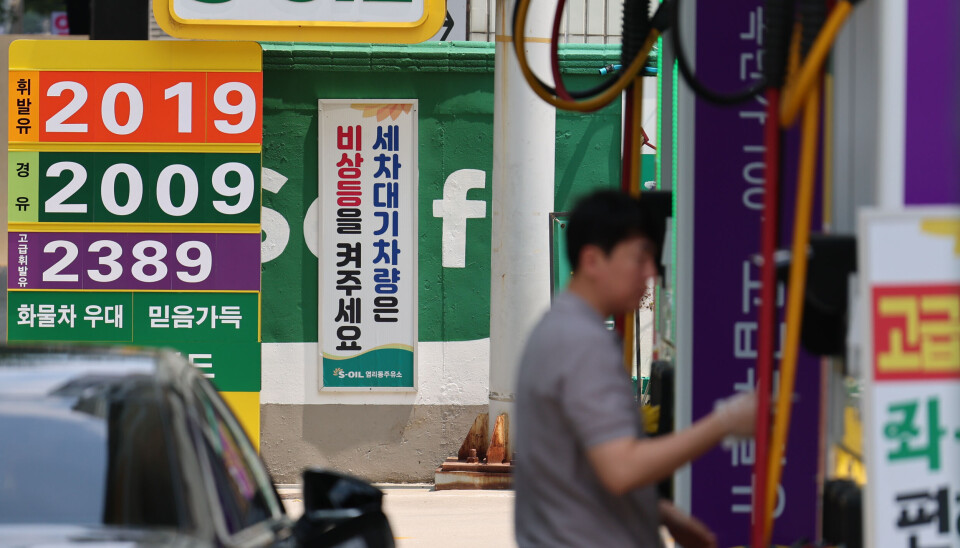
Surging oil prices driven by the Middle East conflict have added to the burden on energy-importing countries by increasing inflationary pressures and widening current account deficits. The Bank of Thailand expects the country’s current account surplus to shrink from $15.9 billion last year to nearly zero this year.
Oil prices are on display at a gas station in Seoul on June 17.YONHAP
However, the current situation reportedly differs fundamentally from the 1997 crisis on a deeper level.
Back then, fixed exchange rates, heavy short-term dollar-denominated debt and depleted foreign exchange reserves combined to trigger the crisis. Today, floating exchange rates help absorb external shocks, and foreign exchange reserves remain robust.
Thailand’s foreign exchange reserves amount to about 53 percent of its GDP. InnovestX Securities, a Thai brokerage, described the recent weakness in Southeast Asian currencies as “manageable localized stress.”
“The likelihood of it developing into a crisis like that of 1997 is low,” the firm said.
Today’s risks are less about the collapse of the financial system but more about stagflation fueled by elevated exchange rates and oil prices, according to the firm.
Similarly, the won’s weakness is not seen as a sign of an impending currency crisis.
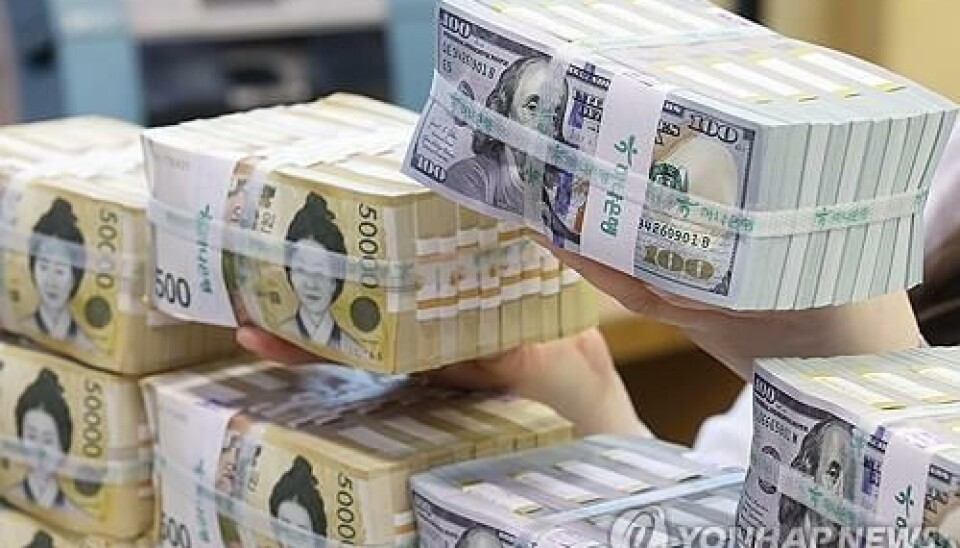
Korea’s foreign exchange reserves stood at $427 billion at the end of May, more than 10 times the $30 billion to $40 billion held during the 1997 financial crisis.
Dollar and won bills are stacked at a branch of Hana Bank in central Seoul on April 3.YONHAP
“[Weak currency] is not a problem unique to Korea,” Bank of Korea Gov. Shin Hyun-song said in May. “The phenomenon appears in countries that import large amounts of crude oil.”
Instead, experts view the won’s weakness as reflecting a combination of factors, including foreign investors’ net selling of Korean stocks, increased dollar outflows driven by overseas investment and the won’s tendency to move in tandem with the weakening yen.
Foreign investors sold a net 4.3 trillion won ($2.78 billion) worth of shares on the benchmark Kospi market on Thursday. The won weakened by 0.9 won to close at 1,555.8 against the dollar, marking its 33rd consecutive trading session in the 1,500 range.
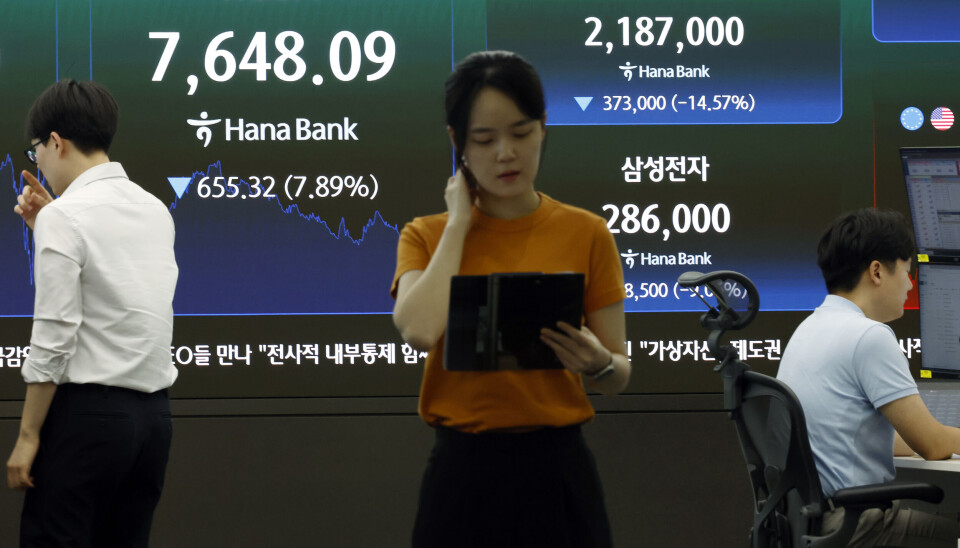
The Kospi plunged 7.89 percent as semiconductor stocks tumbled, with Samsung Electronics falling 9 percent and SK hynix dropping 14 percent. The benchmark index fell below the 8,000-point level for the first time in 15 trading sessions.
A screen in Hana Bank's trading room in central Seoul shows the Kospi closing at 7,648.09 on July 2, 655.32 points, or 7.89 percent, lower from the previous session.YONHAP
Still, bad omens linger.
The 1997 crisis began with Asia’s weakest economy. Today, Indonesia is the most vulnerable link.
Concerns over the Prabowo Subianto administration’s state-led economic policies and the independence of the country’s central bank have fueled foreign capital outflows. Indonesia is also sensitive to rising oil prices because, although it exports crude oil, it imports refined petroleum products, leaving its current account exposed.
Its central bank, Bank Indonesia, has raised interest rates three times over the past month by a combined one percentage point. Even so, the country’s foreign exchange reserves have fallen to their lowest level in two years, and its stock market has plummeted by about 29 percent this year.
The yen’s prolonged weakness presents another source of concern, though for different reasons than in 1997.
While the weak yen was merely one of the factors behind the 1997 crisis, it is now at the center of the current bout of volatility. Years of yen depreciation, combined with the U.S.-Japan interest rate gap and yen carry trades, have entrenched the currency’s structural weakness.
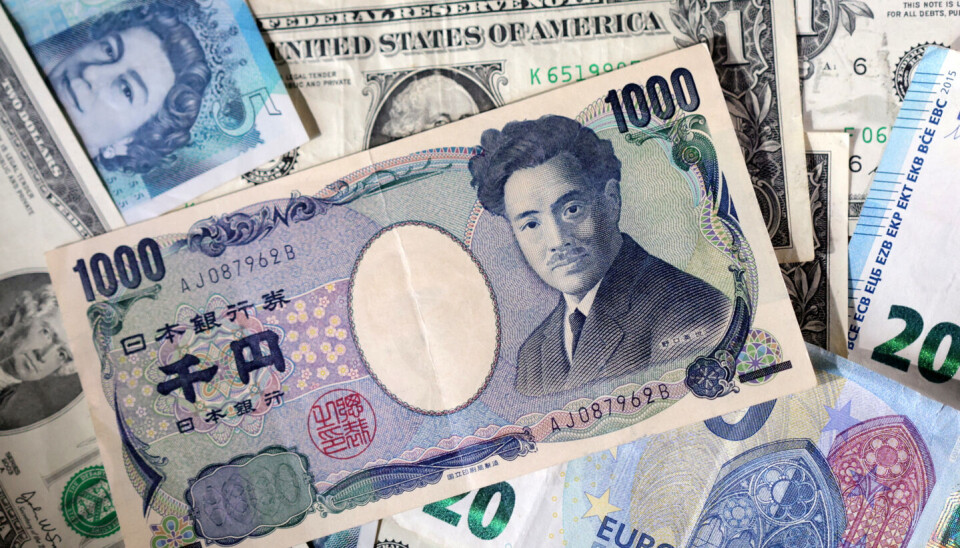
The U.S. dollar, euro, yen and pound banknotes are seen in this illustration taken May 4.REUTERS/YONHAP
The yen weakened beyond 162 against the dollar in intraday trading in late June, marking its weakest level in 40 years. The yen has continued to weaken despite intervention by Japanese authorities.
“Since the Donald Trump administration, Korea and Japan have become deeply integrated into U.S.-centered supply chains, making the won highly sensitive to fluctuations in the yen,” said Park Hyung-joong, an economist at Woori Bank. “Korea is in a better position because it has industries such as semiconductors that generate dollar earnings. But a further weakening of the yen would ultimately reflect an even stronger dollar and increase pressure on Asian currencies across the region.”
This article was originally written in Korean and translated by a bilingual reporter with the help of generative AI tools. It was then edited by a native English-speaking editor. All AI-assisted translations are reviewed and refined by our newsroom.