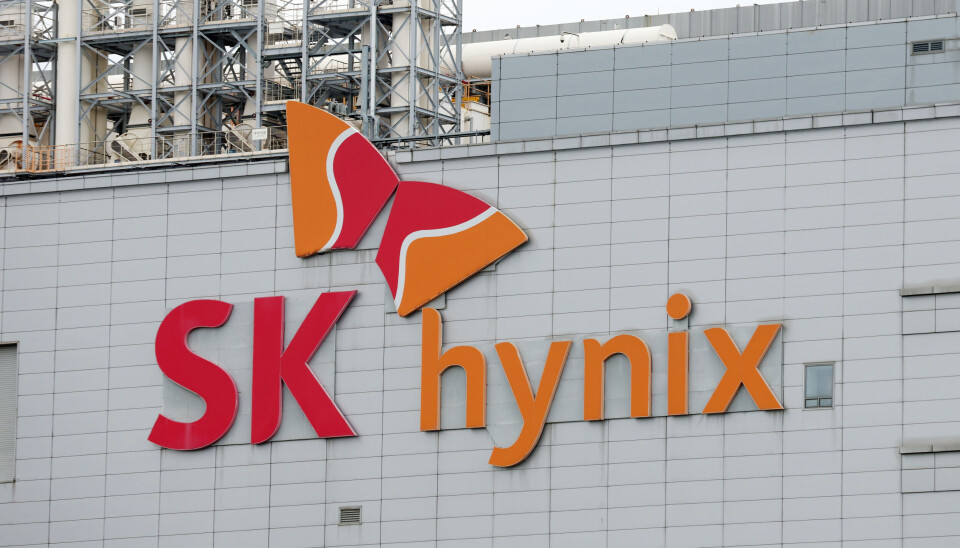
SK hynix's headquarters in Icheon, Gyeonggi, on Aug. 24NEWS1
Unionized SK hynix workers approved a revised wage deal Wednesday, concluding this year's negotiations by raising the cash portion of their profit-sharing bonus to 50 percent from 40 percent.
The union, which includes production-line workers in Icheon, Gyeonggi, and Cheongju, North Chungcheong, held the vote from 6 a.m. Tuesday to 9 a.m. Wednesday. Turnout came to 95.37 percent, with 57.08 percent voting in favor.
The vote came about three weeks after the union narrowly rejected the initial tentative agreement.
Labor and management drew up the revised agreement on Sept. 9, raising the basic PS payout ratio to 50 percent cash and 50 percent stock, from 40 percent cash and 60 percent stock. The new default already gives cash-preferring employees more than they would have gotten under the original plan, while those who prefer stock can raise their allocation further, in 10 percent increments up to 100 percent.
The revised deal also moves up payment of deferred PS. A portion of the bonus, calculated based on last year's earnings, had been set to be paid out over the next two years; that deferred portion will now be paid early, a move aimed at reducing confusion as the bonus payment method changes.
The agreement expands eligibility for additional home loan support to single-parent households as well. Previously, that additional support, on top of the basic support all employees receive, was limited to married couple households.
SK hynix plans to hold a signing ceremony for the final agreement before the Chuseok holiday, running from Sept. 24 to 27, formally wrapping up this year's wage and collective bargaining process.
A bonus formula under fire
Chey Tae-won, SK Group Chairman and head of the Korea Chamber of Commerce and Industry, speaks during a forum held on Jeju Island on July 15.YONHAP
Management had proposed overhauling the bonus it had previously paid entirely in cash amid growing debate over whether an uncapped bonus formula, pegged at a fixed percentage of operating profit, was still appropriate.
During the chip industry's boom, or "super cycle," that formula produced astronomical bonuses that critics said helped drive up prices, including housing costs, in the areas around SK hynix's operations. The structure also drew "fairness" complaints, since production workers with only a high school diploma, among other job categories, could receive bonuses worth hundreds of millions of won regardless of role.
The debate wasn't confined to Korea. Micron's union in Taiwan has also demanded that the company tie its bonus system to profits, following the model used by Samsung Electronics and SK hynix in Korea, even as Korean companies moved to scale that same model back.
SK Group Chairman Chey Tae-won had earlier addressed the very criticism driving the change. "If employees' happiness comes at the expense of other stakeholders' happiness, then for the sake of sustainable happiness, we need to address the bonus calculation issue," he said at a July press conference for the Korea Chamber of Commerce and Industry's forum in Jeju Island.
Management's rationale aside, the proposed fix was not universally welcomed by employees. Some workers opposed the proposal, arguing bonuses should continue to be paid mostly in cash. With the bonus due to be paid out early next year expected to be more than five times larger than this year's, discontent grew when the company moved to convert the PS, which it had previously paid entirely in cash, into stock. In the process, an integrated union spanning multiple job categories formed in response to SK hynix's existing union and also gained strength.
Facing that resistance, management worked to win workers over ahead of the revote. The company held roughly 60 briefing sessions to explain the reasoning behind the change. "Despite the initial rejection, labor and management put their heads together and found a way to voluntarily improve on the existing framework," an SK hynix spokesperson said. "We'll work through whatever challenges come next together, as a company and as employees."
Not everyone believes the revised deal goes far enough, though. "Globally, Big Tech companies use restricted stock units as their basic form of compensation, but they vary the amount granted based on individual contribution," said Song Jae-yong, a chair professor at Seoul National University's College of Business Administration. "It would be desirable to raise overall compensation levels while allocating stock differentially based on individual performance, and to decide the scale and method of bonuses through a structure that requires approval from the board of directors and shareholder meeting."
This article was originally written in Korean and translated by a bilingual reporter with the help of generative AI tools. It was then edited by a native English-speaking editor. All AI-assisted translations are reviewed and refined by our newsroom.