Regulator set to rein in leveraged ETFs tied to Samsung, SK hynix amid wild volatility
Authorities are preparing tougher rules as a surge in buying and selling fuels massive swings in the main bourse, with one politician likening it to a casino.
A screen displays trading for a single-stock leveraged ETF tracking Samsung Electronics in a trading room in Seoul on May 27, the day that the fund category debuted on the market.YONHAP
Vociferous investor appetite for leveraged exchange-traded funds (ETF) for Samsung Electronics and SK hynix has grown so formidable since hitting the market less than two months ago that the Kospi largely fluctuates in step with the ETFs' daily flows.
2x leveraged ETFs and negative compounding
With a 2x leveraged exchange-traded fund, the price movement is doubled, which can result in losses even if a stock rises and then falls back to the original price.
How does this happen?
If a stock rises in value and then drops back to the original price, the share loses less by percentage as it falls.
For twice-leveraged stocks, however, losses are doubled, meaning that the share price may fall below the original value.
Regular 2x leveraged
Price $100 $100
Rise $130 (+30%) $160 (+60%)
Fall $100 (-23.1%) $86.08 (-46.2%)
Actual returns may differ based on the decimal places used to calculate gains and losses.
To counter the unprecedented volatility, the financial authorities are set to come up with measures against the single-stock ETFs that take doubled bets on the market bellwethers, according to Finance Minister Koo Yun-cheol on Tuesday.
"We are working on measures to mitigate and minimize those problems," he said during a meeting with lawmakers.
Lawmakers from both the ruling and opposition parties have demanded that the semiconductor-driven funds, with an estimated $9 billion in assets under management, be either scrapped or heavily regulated.
Rep. Ahn Cheol-soo of the conservative People Power Party called for the delisting of the 14 types of leveraged stocks sold by major brokerages including Mirae Asset Securities, Korea Invest & Securities and KB Securities, which had a combined market cap of 12.7 trillion won ($8.2 billion) as of close on Tuesday.
"The Kospi has turned into a casino," he said on his Facebook account, arguing that 212 trillion won worth of buying and selling in leveraged ETFs tied to the two chipmakers has amplified market volatility.
"The Kospi has become a top-heavy market, with Samsung Electronics and SK hynix alone accounting for 60 percent of its market capitalization," he wrote. "Adding leverage on top of that has allowed daily portfolio rebalancing and arbitrage trading to jolt the market, sending the Korea Volatility Index to a record-high 90.8."
On the other side of the aisle, Rep. Han Jeoung-ae of the ruling Democratic Party also urged the regulators to carefully assess whether the ETFs led to excessive concentration in certain stocks and find ways to lessen the unexpected consequences.
Given that the leveraged products must rebalance daily to maintain exposure, the feedback loop exacerbates the Kospi with an unusually top-heavy structure.
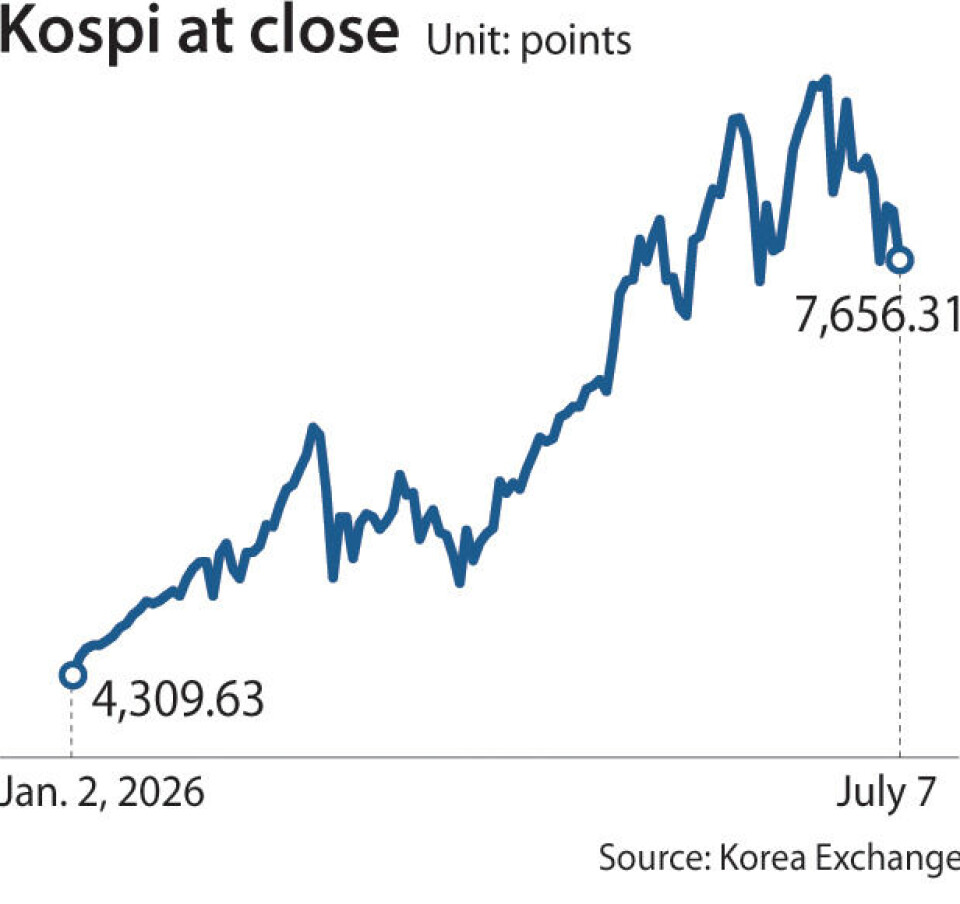
This year through July 7, sidecars that halt program trading on both the buy side and sell side have been issued 32 times, with the latest coming on Tuesday, exceeding the 26 recorded during 2008 when markets reeled from the global financial crisis.
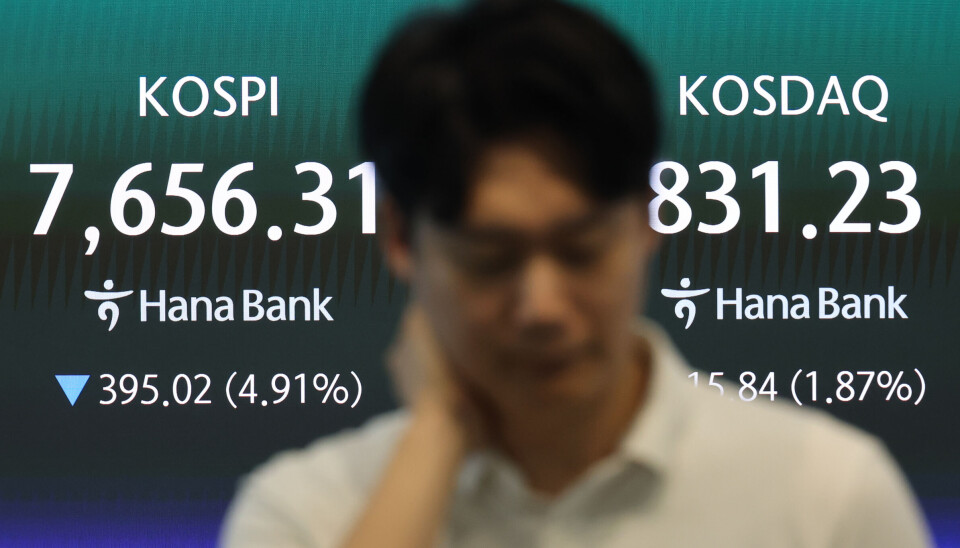
The Kospi plummeted 4.91 percent to 7,656.31 points on Tuesday, which pushed some of the leveraged products down over 20 percent.
A display board at Hana Bank's trading room in central Seoul shows the closing levels of the Kospi and Kosdaq on July 7. The main bourse closed down 4.91 percent at 7,656.31, while the tech-heavy secondary index fell 1.87 percent to 831.23.YONHAP
"The pronounced volatility in single-stock leveraged ETFs reflects the Korean market's heavy concentration in semiconductor stocks at the moment,” said Won Jai-hwan, a finance professor at Sogang Business School. “To mitigate the risks, regulators could strengthen investor safeguards, such as extending the mandatory education requirement and raising the minimum deposit. But longer term, volatility could subside once the semiconductor-driven market cools.”
The brokerages selling the funds have raked in handsome profits, but those in the industry share the concern.
“In the past, we were on alert when a sidecar was issued, but now it has become business as usual, which is really a risky sign,” said a source at a brokerage that lists multiple leveraged ETFs.
Currently, investors must complete two hours of mandatory online training — one hour of basic education and one hour of advanced instruction — and maintain a minimum deposit of 10 million won before trading single-stock leveraged ETFs.
Financial Supervisory Service (FSS) Gov. Lee Chan-jin even expressed regret last month that the regulator approved the introduction of the new type of investment vehicle.
“We should have stopped it, even if it meant throwing ourselves in front of it," he said.
The FSS issued a consumer alert about the products last month, but the warning had little impact on investor inflows.