Large retailers face higher fines for abuse of power under FTC's proposal
In many previous cases, fines have been capped at a fixed amount, preventing penalties from adequately reflecting the seriousness and scale of the misconduct.
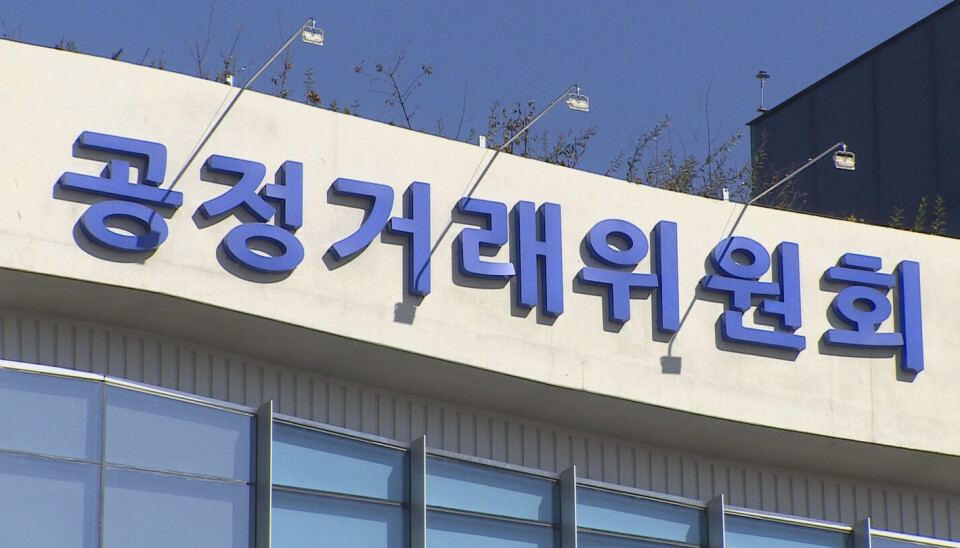
The sign of the Fair Trade Commission at its headquarters in SejongYONHAP
Large retailers that abuse their bargaining power over suppliers could face significantly heavier fines under new rules proposed by Korea’s antitrust regulator, with penalties in some cases reaching 10 percent of the value of goods purchased from affected suppliers.
The Fair Trade Commission (FTC) said on Thursday that it will give advance notice of its proposed revisions to the Enforcement Decree of the Act on Fair Transactions in Large Retail Business, including a guideline for calculating fines.
The changes target conduct overlapping with what Koreans refer to as gapjil, or abuse of power, such as forcing suppliers to shoulder promotional costs that retailers should bear.
The FTC proposed the changes after reviewing violations of the law over the past decade. It found that fines for many cases were capped at a fixed amount because authorities could not accurately calculate the monetary scale of the violation. This prevented penalties from adequately reflecting the seriousness and scale of the misconduct.
Under the revisions, fines would be calculated through a two-step system.
When authorities can determine the monetary value of a violation, such as the losses suffered by suppliers or the improper gains obtained by a retailer, that amount would serve as the basis for calculating the fine. The FTC would multiply it by a rate determined according to the severity of the violation.
For example, if a retailer improperly forces a supplier to cover promotional expenses, the amount shifted onto the supplier would be treated as the value of the violation.
When regulators cannot calculate the value of a violation, they would no longer resort to a fixed fine of up to 500 million won ($362,350). Instead, the fine would be based on what the retailer paid to purchase goods from suppliers connected to the violation, with a separate penalty rate applied to that amount.
Coupang's headquarters in Gwangjin District, eastern Seoul, on Aug. 5YONHAP
The FTC also plans to raise the rates used to calculate penalties. When a fine is based on the monetary value of a violation, the applicable range would increase from the current 60 to 140 percent to 80 to 200 percent.
For violations classified in the most serious category, the rate would rise from the current 140 percent to between 180 and 200 percent.
When fines are based on the value of goods purchased from affected suppliers, a new set of rates would apply, reaching 9 to 10 percent for violations in the most serious category.
“The amount paid to suppliers is likely to be larger than the monetary value of the violation, so we set the [proposed] rates so that violations of similar severity would result in similar fines,” an FTC official said.
Penalties for repeat offenders would also become harsher. A company with even one previous violation within the past five years could have its fine increased by up to 50 percent, with repeated violations allowing increases of up to 100 percent.
The same would happen to reductions available to companies. The maximum reduction for fully cooperating with both an investigation and subsequent deliberations would be lowered to 10 percent. The reduction available to a company that voluntarily corrects its violations would also be cut from as much as 50 percent to no more than 10 percent.
The FTC plans to finalize the revisions by the end of the year after collecting public feedback and undergoing a review by the Ministry of Government Legislation.
This article was originally written in Korean and translated by a bilingual reporter with the help of generative AI tools. It was then edited by a native English-speaking editor. All AI-assisted translations are reviewed and refined by our newsroom.