Korean won gains sharply against yen as SK hynix inflows, rate hike lift currency
The won has climbed more than 5 percent against the yen in three weeks, reaching its strongest level against the Japanese currency since Nov. 22, 2024.
Pedestrians line up in front of a currency exchange shop in Myeongdong in Jung District, central Seoul, on July 5.YONHAP
The won's value has surged more than 5 percent against the Japanese yen in three weeks, as dollar inflows from SK hynix's $26.5 billion U.S. listing and a Bank of Korea (BOK) rate hike helped the local currency's value outpace a stubbornly weak yen.
The won strengthened by 52.29 won from July 2 to trade at 906.54 won against 100 yen as of 3:30 p.m. on Tuesday. It reached its strongest level against the yen since Nov. 22, 2024, when the won traded at 905.03 won against 100 yen.
The yen-won exchange rate had spiked as high as 1,000 won per 100 yen last year. It began returning to the low 900-won range this month.
The local currency also strengthened against the dollar. The won strengthened by 5 won from the previous session to trade at 1,473.4 won against the dollar as of 3:30 p.m. Tuesday.
Compared to the exchange rate of 1,555.8 won against the dollar at the beginning of the month, the won has strengthened by about 5.3 percent.
The won posted the largest gain this month among major currencies, strengthening by about 4 percent, according to Bloomberg. The yen, meanwhile, remained weak at around 162 yen against the dollar.
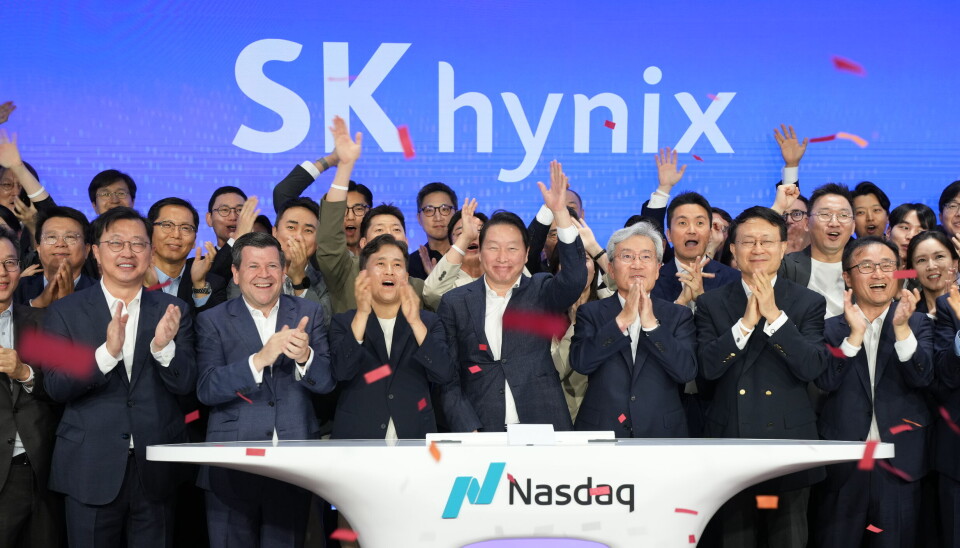
Analysts attributed the won's strength primarily to improved dollar liquidity following SK hynix's $26.5 billion American depositary receipt (ADR) listing in the United States.
"Demand for currency conversion [of selling dollars and buying won] following the ADR listing, along with pent-up demand, has improved dollar liquidity," said Park Sang-hyun, an analyst at iM Securities. "An increase in foreign exchange hedging by shipbuilders and slower foreign selling of Korean stocks also contributed."
SK hynix executives ring the Nasdaq opening bell in New York as confetti falls to celebrate the chipmaker’s ADR trading launch, on July 10.NASDAQ
The BOK's benchmark interest rate hike has also helped strengthen the won. The central bank raised its benchmark interest rate by 25 basis points to 2.75 percent from 2.50 percent on Thursday. Expectations of further rate hikes have increased the appeal of won-denominated assets, while a large current account surplus driven by strong semiconductor exports has further supported the local currency.
The yen, by contrast, has struggled to strengthen despite expectations that the Bank of Japan will continue normalizing monetary policy. The yen has remained around 161 to 162 yen against the dollar since mid-June.
The Japanese government's suggestion that its Government Pension Investment Fund, one of the world's largest public pension funds, could purchase Japanese government bonds has helped curb a sharp rise in bond yields. But it has done little to strengthen the yen.
Developments in the Middle East also remain a variable.
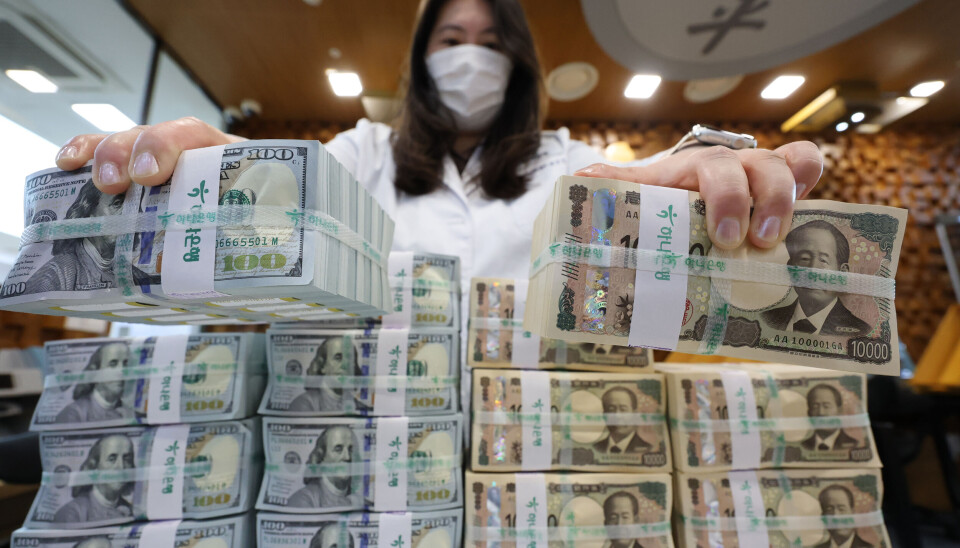
An employee holds up dollar and yen bills at Hana Bank's counterfeit notes response center in Jung District, central Seoul, on July 2.YONHAP
"Geopolitical uncertainty stemming from the Middle East, higher oil prices and demand for safe-haven assets could continue to strengthen the dollar," Kim Yu-mi, an analyst at Kiwoom Securities, said.
Supply disruption concerns intensified after Yemen’s Houthi rebels threatened to blockade Saudi oil exports. Brent crude climbed above $91 a barrel during trading on Monday to reach its highest level in more than a month. It later pared some of its gains and stood at $88.34 a barrel as of 3:30 p.m.
“The divergence between the won and the yen could persist in the near term,” analyst Park Sang-hyun said. “But the Federal Reserve’s interest rate policy and oil price movements will determine whether the dollar strengthens or weakens, which in turn will shape how the won and the yen move against it.”
This article was originally written in Korean and translated by a bilingual reporter with the help of generative AI tools. It was then edited by a native English-speaking editor. All AI-assisted translations are reviewed and refined by our newsroom.