Foreign tourism surge boosts Busan businesses as city targets 5 million visitors this year
A 40 percent jump in overseas visitors and a 56 percent rise in spending are lifting Busan retail sales and cutting commercial vacancies in parts of the city.
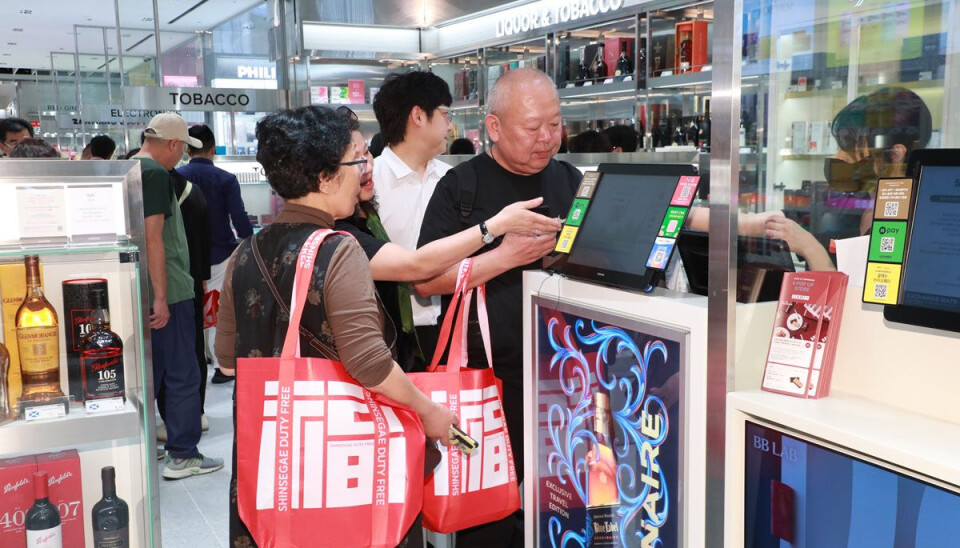
Foreign tourists shop at Shinsegae Duty Free on Sept. 29, 2025.SHINSEGAE DUTY FREE
Foreign visitor spending is reviving Busan's commercial districts after overseas arrivals jumped 40 percent from a year earlierin the first five months of 2026, fueling retail sales and lowering vacancy rates in key shopping areas.
The number of foreign visitors to Busan reached 1.94 million in the January-May period, according to Busan Metropolitan City on Monday.
Theyspent 454.4 billion won ($307 million), up 56 percent from a year earlier, according to Korea Tourism Data Lab's credit card spending analysis. The figure was the second highest nationwide after Seoul. Spending reached 132.2 billion won in May alone, more than two and a half times the level recorded at the beginning of the year.
Large tourist attractions and retailersposted particularly strong growth in spending by foreign visitors.
At the Osiria Tourism Complex, a tourism and leisure district in Gijang County, sales to foreign customers at Lotte Premium Outlet Dong-Busan increased 150 percent in the January-to-May period, while those at Lotte World Adventure Busan rose 35 percent.
In Haeundae District, foreign sales at Lotte Hotel's Signiel Busan and L7 Haeundae climbed 60 percent and 82 percent, respectively. Foreign sales at Lotte Department Store Busan Main also jumped 125 percent.
"As the average stay by foreign tourists has lengthened to between two and a half and three nights, we are offering programs that allow visitors to experience Korean culture and cuisine rather than simply shopping," a Lotte Department Store Busan Main representative said. "The response has been positive, and we plan to expand those programs."
Tourism experts say the longer stays are becoming as important as the increase in visitor numbers since an extra day in the city generates additional spending on hotels, restaurants, transportation and shopping.
BTS fans enter Incheon Airport on March 19 to watch the boy band's performance in Gwanghwamun, central Seoul, on March 21.NEWS1
Major local culturalevents such as BTS concerts have recently produced similar ripple effects by boosting spending on accommodations, shopping and traditional markets.
The increase in spending has also helped reduce commercial vacancies.
The vacancy rate for medium and large commercial properties in Seomyeon and Jeonpo-dong, Busanjin District, fell to 11.2 percent in the first quarter from 16.5 percent a year earlier, according to the Korean Statistical Information Service. The rate in Nampo-dong declined from 24.5 percent to 21 percent over the same period, even as the citywide vacancy rate increased.
Experts point out that to sustain the tourism boom, visitors need to be encouraged to venture beyond large shopping centers into neighborhood commercial districts. Improvements to transportation and visitor guidance are required, along with expanded discounts and cultural programs that involve local merchants.
"Foreign tourists have increased significantly in the Nampo-dong area and Kkangtong Market, but the lack of parking and public restroom facilities has become a growing problem," said Yoo Jae-in, head of the merchants association for Jagalchi Market, which was newly renamed the Jagalchi Ajimae Market (translated). "If more travel routes connecting visitors to neighborhood commercial districts and other attractions are developed, even more foreign tourists will come."
The Busan Metropolitan City said it plans to spread tourism spending more broadly across the local economy by expanding cruise tourism, promoting the Visit Busan Pass and strengthening overnight attractions such as the Busan Fireworks Festival and the Starry Night at Busan Night Festa.
"We expect the number of foreign visitors to Busan to exceed 5 million this year," MayorChun Jae-soosaid. "We will make sure visitors can travel comfortably by improving transportation, safety and accommodations."
This article was originally written in Korean and translated by a bilingual reporter with the help of generative AI tools. It was then edited by a native English-speaking editor. All AI-assisted translations are reviewed and refined by our newsroom.