ETFs get personal, allowing investors to bet on, against Elon Musk
New ETF launches in Korea and the United States show the fund boom branching into specialized products that not only reflect investment preferences but also personal beliefs.
Elon Musk attends the U.S.-Saudi Investment Forum in Washington on Nov. 19, 2025.REUTERS/YONHAP
The latest exchange-traded fund (ETF) launches in Korea and the United States underscore how the funds are evolving beyond traditional index investing — with one market embracing Elon Musk's vision for the future while the other is creating products that exclude his companies.
KB Asset Management on Tuesday listed the RISE US Space-Robot Top2 Treasury Balanced 50 ETF, which allocates 25 percent each to Tesla and SpaceX, while the remaining half is invested in short-term U.S. Treasury bonds. The bond-equity hybrid structure allows investors to allocate up to 100 percent of retirement pension accounts to the fund.
“Tesla and SpaceX offer strong growth potential but also come with high volatility,” said Yook Dong-hwi, head of ETF product marketing team at KB Asset Management. “The ETF was designed to provide long-term investment to Elon Musk's ecosystem spanning space, AI and robotics.”
Across the Pacific, however, an ETF issuer is preparing a product built around avoiding Musk altogether.
U.S. asset firm Subversive Capital recently filed paperwork with the Securities and Exchange Commission to launch the Ex-Elon ETFs, which would track the Nasdaq-100 and S&P 500 while excluding companies founded or led by Musk. Its prospectus cites concerns over corporate governance, political risks and share-price volatility related to Musk-affiliated companies.
Bloomberg described the filing as a sign of how the ETF industry is “slicing broad market exposure into increasingly specific investment views.”
The U.S. ETF market has rapidly expanded into products that reflect investors' beliefs and preferences.
One example is the Tradr 1X Short Innovation Daily ETF (SARK), an inverse ETF that bets against Cathie Wood's flagship ARK Innovation ETF (ARKK).
Elon Musk, CEO of SpaceX, speaks via videolink on the day of SpaceX's initial public offering at the Nasdaq MarketSite in New York on June 12.REUTERS/YONHAP
Politics has also become an investment theme. The Unusual Whales Subversive Democratic Trading ETF (NANC)mirrors stock trades made by Democratic members of Congress, while the Unusual Whales Subversive Republican Trading ETF (KRUZ) follows Republican lawmakers' investments.
Their performances have diverged. SARK has fallen 13.8 percent over the past year, while NANC and KRUZ have returned 20 percent and 28 percent, respectively.
The Wall Street Journal recently highlighted several unconventional ETF strategies as examples of how unusual the market has become.
One is the Tuttle Capital UFO Disclosure ETF, launched in February, which invests in companies expected to benefit if the U.S. government releases advanced technologies related to unidentified flying objects. Another is the Nicholas Bitcoin and Treasuries AfterDark ETF, listed in April, which holds Bitcoin only when U.S. stock markets are closed.
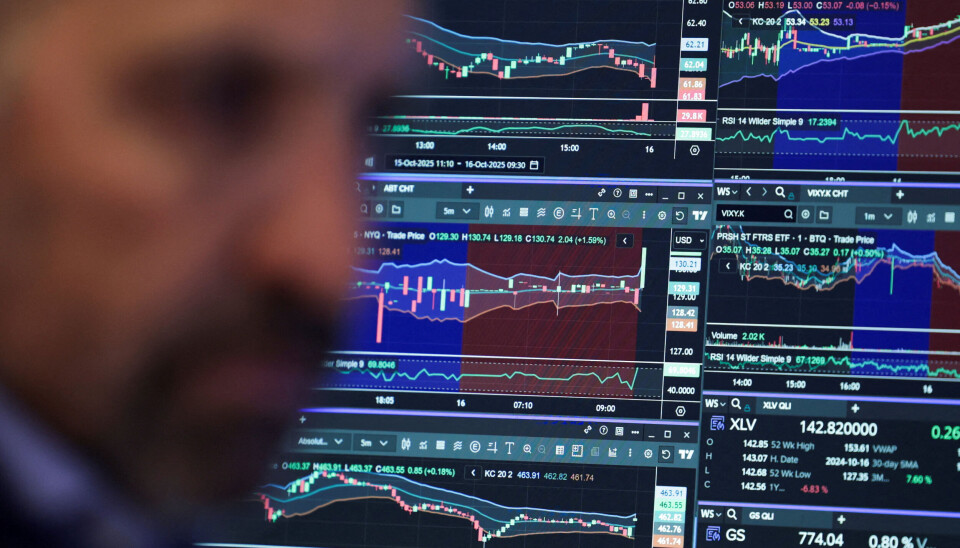
A trader works on the floor at the New York Stock Exchange in New York on Oct. 16, 2025.REUTERS/YONHAP
There are also ETFs dedicated exclusively to meme stocks popular on social media platforms such as Reddit.
A total of 466 new ETFs were launched in the United States through mid-May this year, according to Morningstar, but only 16 percent were traditional index-tracking funds.
“Cheap, reliable exchange-traded funds are a basic building block of investing. Increasingly, however, ETFs are becoming a high-cost conduit for concentrated, risky or weird strategies,” the Wall Street Journal said.
“So investors need to start approaching ETFs with caution. All too many of the newer ones are investment junk food. And, just as with candy, cookies or French fries, filling up on them can be bad for you.”
Dave Mazza, chief executive officer of Roundhill Investments, also said investors should pay closer attention to fund structures and risks as the market becomes more diverse.
Korea's ETF market, now worth about 500 trillion won ($337 billion), presents a different picture. Rather than diversifying into specialized themes, it remains heavily concentrated in semiconductor-related products.
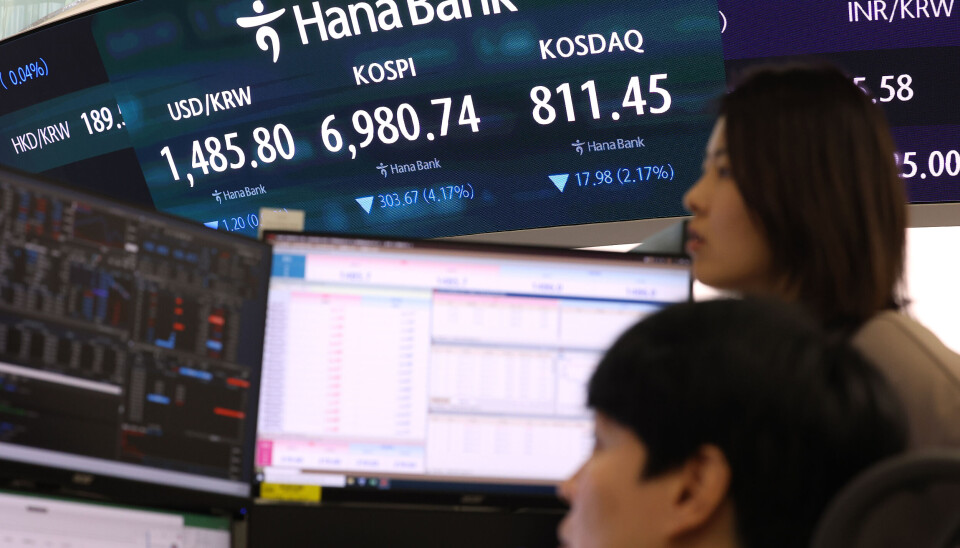
Electronic boards display the Kospi and other major market indexes in the trading room of Hana Bank's headquarters in central Seoul on July 16.YONHAP
Among the 102 ETFs listed this year, 32, or 31.4 percent, focused on semiconductors, according to Korea Exchange and financial company Koscom on Thursday.
As of Wednesday, semiconductor ETFs accounted for 49.5 percent of total ETF trading value.
Actively managed ETFs, which could encourage greater product diversity, represent only 22.4 percent of total ETF assets in Korea. Unlike in the United States, Korean active ETFs must maintain a certain level of correlation with their benchmark indexes, limiting managers' flexibility in product design and portfolio management.
Market experts say regulatory reforms are needed to strike a better balance between investor protection and innovation.
“Rules such as benchmark correlation requirements should be rationalized to give managers greater flexibility in designing and operating ETFs that would create an environment where more innovative products can emerge,” Kim Jae-chil, senior research fellow at the Korea Capital Market Institute, said.
This article was originally written in Korean and translated by a bilingual reporter with the help of generative AI tools. It was then edited by a native English-speaking editor. All AI-assisted translations are reviewed and refined by our newsroom.