A Twosome Place transactions top Starbucks' for third straight month as 'Tank Day' fallout lingers
A Twosome Place has outspent Starbucks for three straight months after the 'Tank Day' backlash, while budget chain Mega MGC Coffee gains ground.
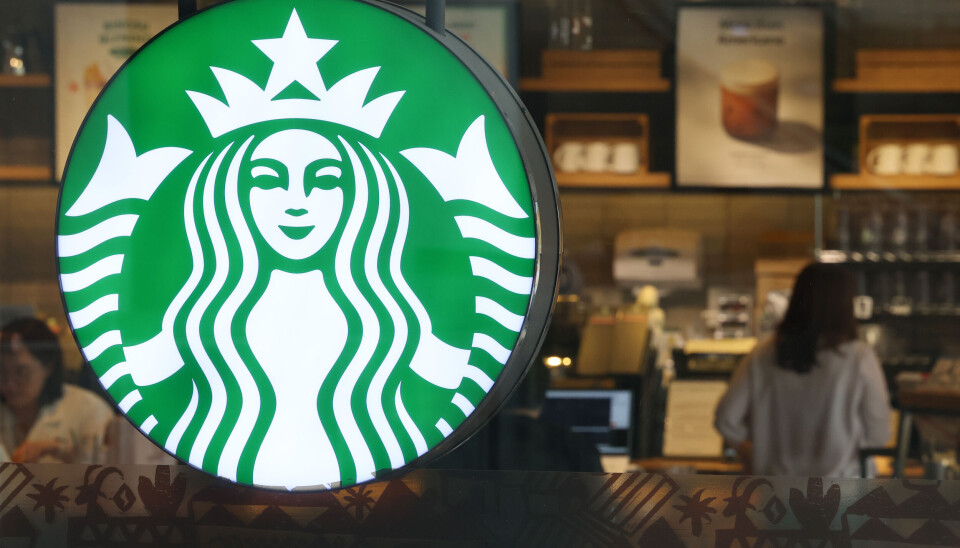
A Starbucks store in Seoul is seen on June 1.
NEWS1
Korea's coffee franchise market is seeing a shift in spending patterns as A Twosome Place posted customer transactions exceeding those of Starbucks for a third straight month since the tone-deaf "Tank Day" promotion debacle, with Mega MGC Coffee closing in on the two market leaders.
Data firm IGAWorks' Mobile Index platform on Tuesday said July's estimated credit and check card payments by customers recorded on local coffee chain A Twosome Place reached 117.05 billion won ($82 million), about 7 billion won more than Starbucks' 110.06 billion won. A Twosome Place's transactions have now exceeded Starbucks' every month since May — the first time in three years of data that it has led Starbucks on a monthly basis.
A Twosome Place posted 123.65 billion won against Starbucks' 121.19 billion won in May — a difference of about 2.5 billion won. The gap further widened in June, when A Twosome Place recorded 120.68 billion won while Starbucks fell to 100.39 billion won, marking a difference of roughly 20.3 billion won.
Over the three months from May to July, A Twosome Place's cumulative customer payments reached 361.38 billion won against Starbucks' 331.64 billion won, a lead of about 29.8 billion won.
The gap narrowed last month, however, as Starbucks' payments rose 9.6 percent from the previous month while A Twosome Place's fell 3 percent.
Mega MGC Coffee, a budget coffee franchise, is also closing in on the two larger chains. Its customer payments last month rose 1.6 percent from the previous month to 98.21 billion won, nearing the 100 billion won mark.
Industry watchers say A Twosome Place and low-cost coffee brands had already been growing before the controversy, but Starbucks' damaged trust and the resulting customer defections appear to have accelerated the shift in the competitive landscape.
BY KIM JI-HYE [[email protected]]
This article was originally written in Korean and translated by a bilingual reporter with the help of generative AI tools. It was then edited by a native English-speaking editor. All AI-assisted translations are reviewed and refined by our newsroom.