Editorials
Chipmakers’ rejection of prepaid power bills warrants reflection (KOR)
Samsung Electronics and SK hynix’s rejection of Kepco’s prepaid power plan underscores the risks of basing industrial and fiscal policy on a prolonged semiconductor boom.
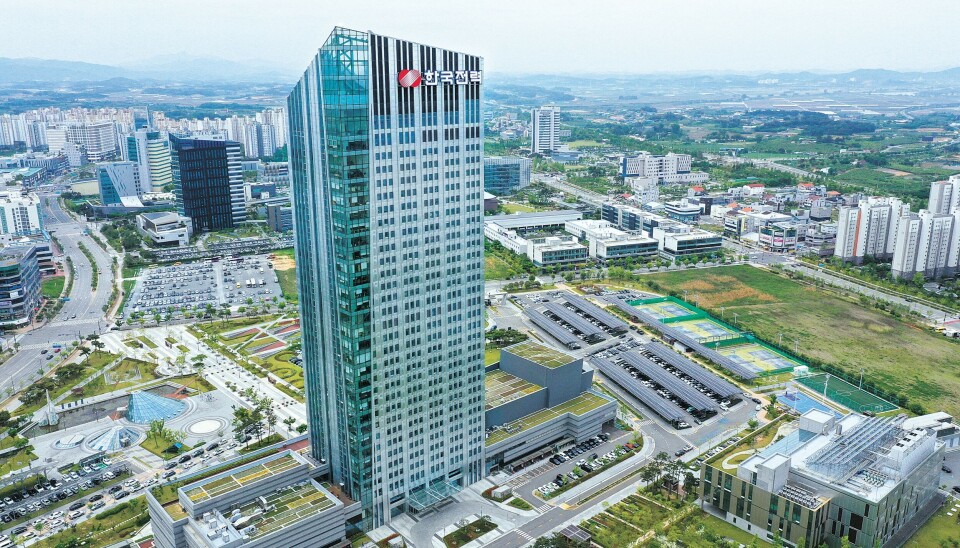
The headquarters of the Korea Electric Power Corporation in Naju, South Jeolla.
YONHAP
Samsung Electronics and SK hynix rejected the Korea Electric Power Corporation's (Kepco) proposal that they prepay 25 trillion won ($18.6 billion) in electricity bills for five years. Kepco, burdened with debt exceeding 210 trillion won, planned to use the money primarily to expand the national power grid, accelerating transmission and substation construction for semiconductor clusters in Yongin, Gyeonggi, and the southwestern region.
The proposal appeared advantageous for the chipmakers as well. They could secure timely electricity supplies for their semiconductor complexes, while receiving interest on the advance payment above the yield on two-year government bonds.
The companies reportedly rejected the proposal because they questioned whether the semiconductor boom would last. In short, they could not be certain that today’s semiconductor supercycle would continue for five years.
Their caution contrasts with the Lee Jae Myung administration’s optimism. Former presidential policy chief Kim Yong-beom cited the irreversible nature of AI demand, arguing that demand for the technology, now industrial infrastructure, would persist. If memory and infrastructure demand in the AI era represents long-term structural change, he said, Korea could for the first time become a country generating sustained excess profits.
That optimism helped inspire the controversial proposal for a “national dividend.” Yet while companies with the clearest view of market conditions remain cautious, the government has been dreaming up policies based on current performance. Fiscal programs resembling cash handouts, premised on prolonged semiconductor prosperity and excess tax revenue, should be reviewed from scratch.
The semiconductor cycle is one concern, but China’s rapid pursuit is greater. As the JoongAng Ilbo's “China’s semiconductor offensive” series reported, Chinese chipmakers are catching up at extraordinary speed, backed by government support, a huge domestic market and a research ecosystem.
The technology gap between Korea and China in memory chips has reportedly narrowed to three years in high bandwidth memory, two years in dynamic random-access memory and one year in NAND flash. Korea must prepare meticulously for the possibility that Chinese companies, supported by a nationwide mobilization of resources, will eventually launch a price war.
This is no time to become intoxicated by the sweet dream of a semiconductor superboom. Above all, policymakers must soberly examine whether the rush to build a semiconductor cluster in the southwest has itself been driven too heavily by optimism about AI.
Samsung and SK hynix have effectively reminded policymakers of a basic principle: Companies investing their own money must prepare for downturns as well as booms. The government, which is spending taxpayers’ money and shaping long-term industrial policy, should be at least as cautious.
삼전닉스가 5년치 전기료 선납 거절한 이유 곱씹어 봐야
삼성전자와 SK하이닉스가 한국전력이 전력망 건설에 필요한 자금 마련을 위해 제안했던 25조원 규모의 5년치 전기요금 선납을 거절했다. 한전이 이 자금을 국가 기간전력망 확충에 우선 투입해 용인 반도체 클러스터 등의 송·변전망 건설을 앞당기겠다는 구상이었다. 두 반도체 회사 입장에서도 용인·호남 반도체 공단에 전력을 제때 공급받을 수 있고 선납금에 국고채 2년물 금리보다 높은 이자를 적용해 준다니 나쁠 게 없는 것처럼 여겨졌다.
두 회사가 한전의 제안을 거절한 이유는 반도체 호황의 지속 가능성을 고민했기 때문이라고 한다. 한마디로 지금과 같은 반도체 수퍼사이클이 5년 내내 이어질지 장담하기 어렵다고 판단한 것이다. 이 같은 기업의 현실 인식은 이재명 정부의 낙관론과 대비된다. 김용범 전 청와대 정책실장은 인공지능(AI) 수요의 비가역성을 거론하며 산업 인프라가 된 AI 수요는 계속될 것으로 봤다. 그는 “AI 시대의 메모리·인프라 수요가 장기 구조 변화라면, 한국은 처음으로 지속적 초과이윤을 생산하는 국가에 가까워질 수 있다”고 했다. 이런 낙관론에 기대 나온 게 논란의 ‘국민배당금’이었다. 정작 시황을 가장 잘 아는 기업은 신중하기만 한데, 정부는 당장의 실적을 보고 꿈에 부풀어 정책을 구상한 것이다. 지금이라도 반도체 호황과 초과 세수가 장기 지속될 것이란 가정하에 추진하고 있는 현금 살포성 재정 사업들을 원점에서 재검토하는 게 맞다.
반도체 사이클도 문제지만, 중국의 추격은 더 큰 문제다. 중앙일보 ‘중국 반도체의 공습’ 시리즈가 보도한 것처럼, 정부 지원과 거대한 내수시장, 연구 생태계를 기반으로 한 중국의 반도체 추격 속도는 상식을 뛰어넘는다. 한·중 메모리 반도체 기술 격차는 고대역폭메모리(HBM) 3년, D램 2년, 낸드플래시 1년으로 좁혀졌다고 한다. 이런 중국 업체들이 국가적 총력 지원을 등에 업고 앞으로 치킨게임을 걸어올 경우를 지금부터 치밀하게 대비해야 한다. 반도체 수퍼 호황의 단꿈에 젖어 있을 때가 아니다. 무엇보다 호남 반도체 속도전이 지나치게 AI 낙관론에 기대서 나온 건 아닌지 냉정하게 검토할 필요가 있다.
This article was originally written in Korean and translated by a bilingual reporter with the help of generative AI tools. It was then edited by a native English-speaking editor. All AI-assisted translations are reviewed and refined by our newsroom.